
Are Your Draughty Windows Worth Saving? What I Learned About Victorian Glass and Sustainability
*Collaborative Post
The 6 AM Condensation Battle
Waking up in a Victorian terrace often involves a bracing morning ritual that has nothing to do with coffee. It starts with seeing your own breath in the bedroom air and ends with a towel in hand, wiping down the “crying” panes of glass that have accumulated a small lake of condensation overnight. That daily blast of cold wears you down. You look at the peeling paint, feel the icy draft sneaking round your ankles, and you’re just done.
In that moment, tearing everything out feels like the only sane option. New plastic windows, factory-fresh and airtight, start to look like the magic fix. The only way, you think, to finally get a warm London home back under your control.
However, there is a twist to this common narrative of home improvement. Pausing that impulse to demolish and replace can actually be the most forward-thinking decision a homeowner makes. Instead of yielding to the quick fix, choosing to restore existing joinery often saves a critical piece of architectural history while drastically reducing a family’s carbon footprint. The core message here challenges the persistent myth that “old” automatically means “inefficient,” proving that heritage and thermal comfort can coexist beautifully.
The Throwaway Culture Trap in Home Renovation
The home improvement industry is heavily weighted towards sales of new units, creating a powerful echo chamber that pushes for full replacement as the only viable solution for draughty homes. Glossy brochures and persuasive salespeople will argue that your original timber frames are past their prime, inefficient relics that belong in a skip. This pitch is designed to sell products, not to preserve the structural integrity or value of your property. It ignores the fact that the timber used in the 19th century is vastly superior to the fast-grown softwoods used today.
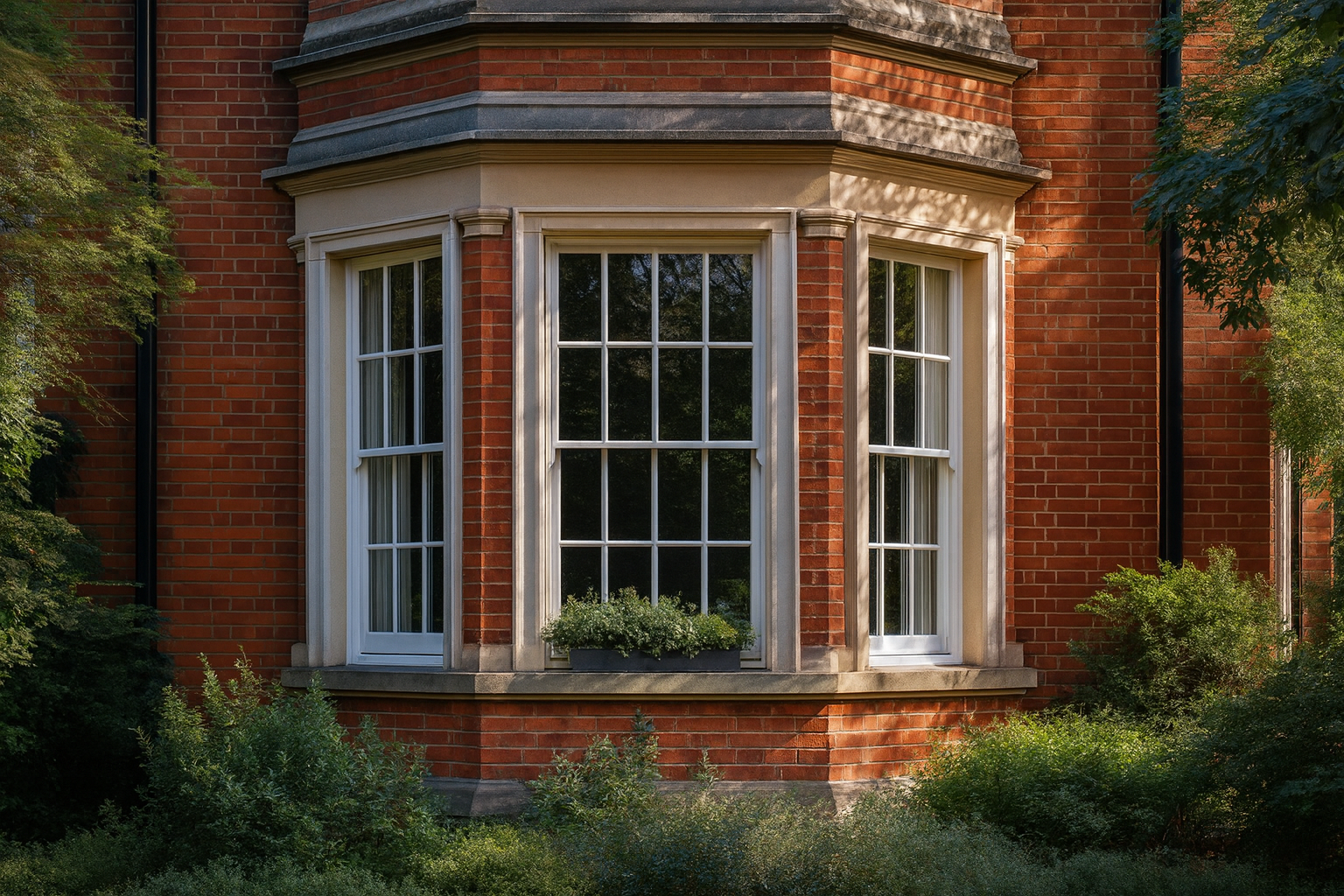
Most Victorian and Edwardian sashes were made from slow-grown Baltic pine or oak. Heavy, dense, full of resin. This timber shrugs off rot for decades. What looks like a disaster on your London terrace – peeling paint, stuck sashes, a bit of soft wood – is often just surface damage. Underneath, the frame is usually rock solid. The rot “problem” is mostly a rot myth. It talks London homeowners into tearing out beautiful old joinery that only needed time, care and a decent decorator, not a skip.
You see it on everyday walks. Streets of terraces and mansion blocks, with skips out front overflowing with 100-year-old sashes. Joinery that’s seen wars, fog and five different boiler upgrades, now headed for landfill. This throwaway instinct doesn’t just create mountains of waste. It quietly bleaches the soul out of London’s streets.
Understanding the quality of what you already own is the first step in resisting the pressure to replace, recognizing that repair is often a far more logical and durable path than buying new disposable alternatives.
The Hidden Carbon Cost of New Windows
When we talk about sustainability, we often focus on energy efficiency in the moment, forgetting the massive environmental cost of manufacturing new products. “Embodied carbon” refers to all the energy consumed to extract materials, manufacture a product, and transport it to your door. Aluminium and uPVC units have a colossal carbon footprint compared to the near-zero impact of repairing existing wood. Producing a single PVC window involves extraction of fossil fuels and high-energy chemical processes, whereas restoration utilizes materials that are already in place.
The disposal of old windows presents another significant environmental challenge. PVC is notoriously difficult to recycle effectively, meaning that the “maintenance-free” plastic windows installed today will likely sit in landfill for centuries after they fail. And they will fail. The average lifespan of a modern sealed unit is roughly 15 to 20 years before the seals break and the glass fogs up.
In contrast, a restored timber window, if properly maintained, can last another 50 to 80 years or more. This longevity makes restoration one of the most impactful sustainable choices a London homeowner can make. By keeping the original fabric of the building, you are actively opting out of the cycle of consumption and waste, proving that the greenest window is usually the one that is already in your wall.
What Actually Happens During Restoration?
Professional restoration goes far beyond a simple “lick of paint” and involves a comprehensive overhaul of the window’s mechanics and structure. The process typically begins with carefully removing the sashes from the box frame, allowing experts to strip away decades of toxic lead paint and inspect the bare wood. Any areas of rot are surgically removed and spliced with new, matching timber or stabilized with advanced epoxy resins, ensuring the frame is as strong as the day it was made.
A crucial part of this modernization is the “invisible” upgrade of draught-proofing. Modern systems involve machining discreet channels into the timber staff and parting beads to house high-performance brush piles. These seals close the gaps that cause rattles and heat loss without altering the visual profile of the window. For those seeking specialized local expertise, companies like Six over Six Windows London understand the specific challenges of London’s pollution and climate, ensuring that the materials and paints used can withstand the urban environment.
Keeping the look is just as important as fixing the mechanics. That slight “wobble” in old Victorian cylinder glass? You can’t buy that today. Modern float glass is flat, perfect, a bit… soulless. The old panes bend the light in a soft, wavy way that makes a period London facade glow, even on a grey Tuesday.
When you keep the original glass where you can, the whole house still reads as authentic. The proportions feel right, the reflections feel right. Swap it for new sealed units, even fancy “heritage” ones, and something is always a little off. The eye knows. The street knows.
Life After Restoration: The Thermal and Aesthetic Payoff
The difference in comfort after a proper restoration is often immediate and tangible. The hallway temperature stabilizes, and the dreaded “curtain flutter” caused by gale-force draughts disappears completely. It is a revelation to discover that a 150-year-old window, when properly tuned and sealed, can perform exceptionally well against the British weather.
An unexpected but delightful benefit is the reduction in noise pollution. The combination of dense, old-growth timber and tight modern seals is surprisingly effective at blocking out street noise, often outperforming cheap, lightweight double glazing. This acoustic improvement makes living in a busy city significantly more peaceful without the need for unsightly plastic frames.
Financially, the payoff extends to property value and energy bills. Estate agents consistently report that buyers pay a premium for well-maintained original features, viewing them as a mark of quality and character. Conversely, “modernised” facades with generic plastic windows can actually devalue a period home. At the same time, the elimination of draughts leads to real-world savings on heating costs, allowing you to enjoy a warm, eco-conscious home that respects its heritage.
Frequently Asked Questions About Saving Old Windows
- Can you double glaze existing sash windows without ruining the look?
Yes, it is possible to retrofit existing frames with “slimline” double glazing or even ultra-thin vacuum glass. These modern units are designed to fit into the narrower rebates of Victorian sashes, offering improved thermal performance without the chunky, visible spacer bars that ruin the appearance of standard double glazing. - Is restoration cheaper than replacement in the long run?
While a high-quality restoration can sometimes cost as much upfront as a cheap PVC replacement, the lifecycle value is far superior. A cheap replacement will need doing again in 15 years, whereas a restored timber window is a lifetime investment. When you factor in the increase in property value, restoration is often the financially smarter choice over decades. - How do I know if my windows are too far gone to save?
It is rare for a window to be truly unsalvageable. If the main box frame is still standing, almost everything else can be repaired or replaced. Structural integrity is key; if the wood is crumbling to dust in your hands across the entire frame, it might be time for a replica, but usually, rot is localized to the sill and lower box, which are easily fixed. - Does draught proofing actually work on sliding windows?
Absolutely. The brush seal systems used by professionals are extremely effective because they form a continuous barrier around the moving sashes. Unlike DIY foam strips that prevent the window from closing properly, these machined seals allow the window to slide smoothly while blocking airflow completely when closed.
The Verdict: Why I’m Glad We Kept The Rattles
Embracing the imperfections of an older home does not mean resigning yourself to freezing winters. It is entirely possible to enjoy modern levels of comfort while respecting the architectural legacy of your property. The decision to restore rather than replace is a vote for quality, sustainability, and history.
Before you make that call to a double-glazing salesperson, I encourage you to get a quote from a restoration specialist. You might find that saving your windows is not only possible but the best decision you ever make for your home. By choosing repair, you are saving a piece of history and helping to save the planet, one window at a time.
*This is a collaborative post. For further information please refer to my disclosure page.
Related Posts:
Keep Your Garden Up to Date with Modern Garden Furniture

*Collaborative Post Matching garden furniture trends with garden design just got easier with this fantastic guide. Garden furniture is essential Read more
Our New Year Trip To Exmoor

We decided to escape the parties and fireworks this New Year mainly due to our elderly dog who is no Read more
Important Things to Consider When Planning a Funeral

The days following a loved one’s death can feel overwhelming. Amid the grief, you are faced with a series of Read more
Fake vs Real Plants? What is the Best Choice for Your Home?

When it comes to home decor, you’d be hard pressed to find something that brightens up a room like plants Read more