
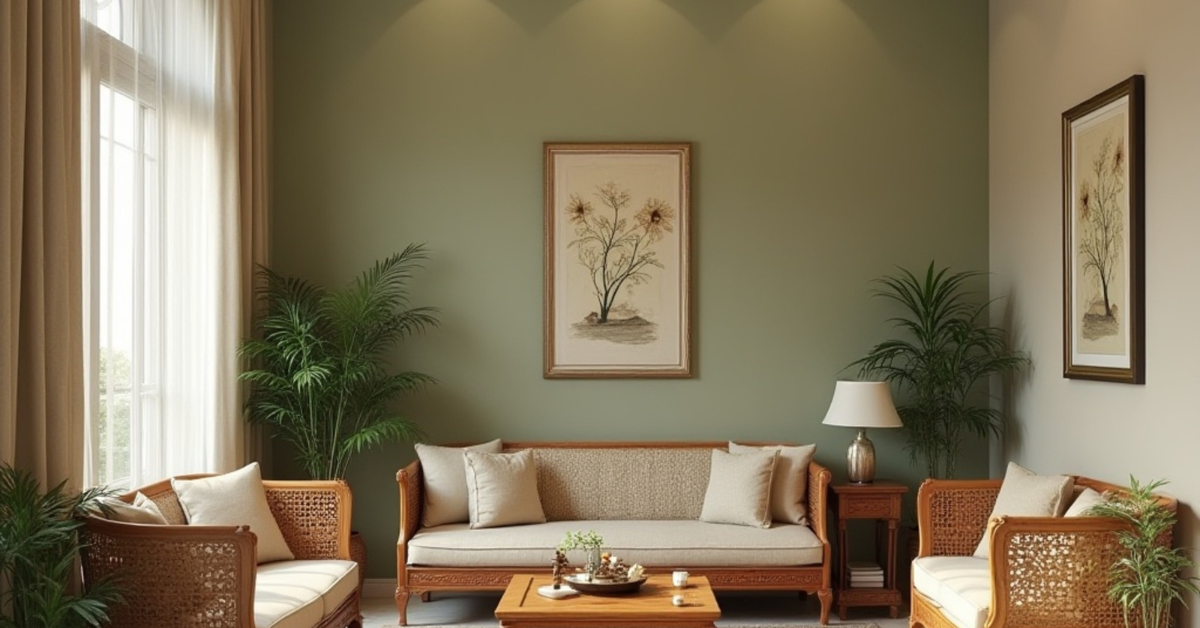
Making Small Spaces Feel Bigger: Wall Art Tricks for Apartments and Family Homes
*Collaborative Post
If you’ve ever stepped over a toy truck, nudged a laundry basket aside, and thought, Why does this room feel so tight?—you’re not alone. For many parents, “decorating” sounds like a luxury task that belongs somewhere after school runs, work deadlines, and bedtime negotiations.
The good news is that wall art can do more than make a room look pretty. The right choices can make a small space feel calmer, brighter, and more open—without moving a single wall. It’s not magic. It’s psychology, proportion, and a few smart styling habits that reduce visual noise instead of adding to it.
Below are four practical, family-friendly strategies that help your home feel lighter on the eyes and gentler on your nervous system.
Go Bigger Than You Think (and Let One Piece Do the Heavy Lifting)
Small homes often end up decorated like a scrapbook: many little frames sprinkled around because it feels safer than committing to one bold choice. Yet that “safe” approach can make the room feel busier, and busy is the cousin of stressed. When your eyes have to hop from one tiny detail to the next, your brain stays slightly “on,” scanning and sorting.
A larger piece of wall art creates a single resting point. It gives your gaze somewhere to land. That simple shift can make a room feel more spacious because it reduces the number of visual stops.
A helpful mindset is this: one strong piece beats five scattered ones.
Once you’ve chosen your focal art, make it feel intentional:
- Place it where life already gathers. Over the sofa, above the bed, behind the dining table, or in the hallway you walk through a hundred times a day.
- Choose “breathing room” art. Landscapes, soft abstracts, gentle shapes, or minimalist prints with negative space tend to expand a room visually.
- Avoid overly detailed, high-contrast designs if your space already has a lot going on (bright toys, patterned rugs, open shelving). Your walls don’t need to compete.
If you’re decorating with kids in mind, bigger can still be practical. A large canvas with a wipeable surface is often easier to live with than multiple framed pieces that collect fingerprints at toddler height.
Quick sanity check before you buy: Tape painter’s tape on the wall in the size you’re considering. If it looks “too big” at first, sit with it for a day. Most people adjust quickly—and then wonder why they ever played it so small.
Use Placement to Create Height and Flow (Your Eyes Follow the Path You Set)
In a small home, placement matters as much as the art itself. Think of wall art like road signs for the eyes. Where you hang it subtly tells your brain, “Look here, then here,” and that sequence shapes how spacious (or cramped) the room feels.
A common mistake is hanging pieces too low because it feels cozy. Cozy can be great, but too low can visually “drop” the ceiling and make the room feel shorter. On the flip side, hanging art too high makes it feel disconnected, like it’s trying to escape.
The sweet spot is balanced: center the artwork around eye level, adjusted for the furniture underneath. If your sofa back is high, your art can sit a bit higher. If you’re hanging above a console table, you can bring it down slightly so it feels anchored.
To make a space feel taller or wider, use orientation as a tool:
- Vertical wall art pulls the eye up. This is your friend in rooms with low ceilings or narrow corners.
- Horizontal art stretches the room visually. Great above a couch, along a hallway, or in a tight living room that needs to breathe.
Gallery walls can work in small homes—when they’re designed like a calm system, not a collage of chaos. The secret is structure. Pick one layout style (grid, clean rows, or a tight cluster), keep spacing consistent, and stay within a limited palette so the wall reads as one statement rather than twenty separate decisions.
If your home feels stressful, you can also be strategic about where not to add complexity. High-traffic areas like entryways and hallways benefit from simpler compositions. When you’re rushing out the door, your brain doesn’t need a busy wall arguing for attention.
Work With Light, Color, and Reflection (Because Bright Rooms Feel Bigger)
When parents talk about wanting a calmer home, they often describe it as “lighter,” even if they don’t mean the paint color. Lightness is a feeling. It’s what happens when a room doesn’t press in on you.
Wall art can either absorb light and make a space feel heavier, or help bounce light and open the room up. The easiest win is choosing pieces that echo brightness already in the room—soft neutrals, airy tones, gentle gradients, or artwork that suggests distance (a horizon line, a path, open sky).
Frames matter too. In a small space, thick dark frames can look bold, but they can also add visual weight. Thin frames, lighter wood, or subtle metallic edges often keep the room feeling more open. If you love a darker frame, use it intentionally and limit the number of competing pieces.
Now, the underused trick: reflection.
Mirrors count as wall art in the most functional way possible. They reflect light, add depth, and make narrow spaces feel less boxed in. If you only do one change this week, do this one:
- Hang a mirror across from a window to double the daylight effect.
- Place a mirror near a lamp so the glow spreads farther.
- In a narrow hallway, a tall mirror can create a feeling of “more room” without any actual room.
If mirrors feel too obvious, try art with subtle shine: glass-front frames (preferably anti-glare), acrylic, or prints with small metallic details. Even a small amount of light bounce can make a room feel less dense.
You can also pair wall art with lighting to make it feel more intentional. A plug-in sconce above a print or a simple picture light can turn one wall into a calming focal point. The goal isn’t dramatic museum lighting. It’s warmth and clarity—two things your brain tends to interpret as “safe and spacious.”
Family-Friendly Styling That Still Feels Spacious (Real Life Gets a Vote)
A beautiful home that can’t survive real life becomes another stressor. Parents don’t need décor that demands constant policing. The best wall art setup is the one that makes your space feel better and stays manageable on a random Tuesday.
Start with durability. If you have little kids, consider:
- Acrylic instead of glass for framed pieces (safer, lighter).
- Canvas prints that wipe clean easily.
- Secure hanging methods (anchors for heavier pieces, proper hooks, and safety strips where needed).
Next: kids’ art. Displaying it can be incredibly grounding. It tells your child, “You belong here,” and it reminds you that life is more than chores and schedules. The problem is that kid art can quickly turn into visual clutter if it’s spread everywhere.
A calmer approach is to curate it like a mini gallery:
Give kids’ art one dedicated zone—one wall, one hallway section, or one line above a desk. Use matching frames or a simple clip rail so it looks cohesive even when the artwork changes weekly. The consistency of the “system” is what reduces stress, not the perfection of each piece.
Finally, use wall art to create zones. In small homes, stress often comes from spaces doing too many jobs at once: the dining table is also a homework station, the living room is also a toy warehouse, the bedroom is also a late-night work corner.
Art can help your brain separate these roles without building walls:
- A calming print above a chair can signal a reading nook.
- A bright, playful piece can mark a kid corner.
- A focused, minimal set of frames can define a work zone.
When zones are visually clear, your mind doesn’t have to work as hard to “reset” from one mode to another. That’s not just décor—it’s mental load management.
Conclusion
A small home doesn’t have to feel like it’s closing in on you. When wall art is chosen and placed with intention, it can create calm, open up sightlines, brighten the room, and reduce the constant feeling of “too much stuff in too little space.”
If you want a simple starting point, pick one wall you look at every day and decide what you want it to do for you. Should it soften the room, add light, create a focal point, or define a zone? Choose one strategy—go bigger, hang for height, add reflection, or create a cohesive family gallery—and build from there.
Your home doesn’t need to be perfect. It needs to feel like it’s on your side.
*This is a collaborative post. For further information please refer to my disclosure page.
Related Posts:
5 Things Everyone Should do Before and After Moving into their First Home

Buying and moving into a first home is an exciting moment for most people. But, once the excitement settles in, Read more
April Gardening Jobs

As the gradual warmth of April breathes life back into our UK gardens, the time has come to roll up Read more
4 Home Security Tips For The New Family

*Collaborative Post One of the most important parts of a home is the ability to keep you and your family Read more
How to Paint a House with Rendered Exterior Walls
*Collaborative Post Wondered how to paint a house with rendered exterior walls? You're not alone. All you have to do Read more