
Everything You Need to Know About Service Dog Tasks for Anxiety
*Collaborative Post
When you think of a service dog, what comes to mind? Probably a big dog that guides someone who’s blind or a Labrador retriever pulling/pushing a wheelchair. While these are common examples of service dog work, did you know that service dogs can also help with anxiety? That’s right, service dogs can be trained to help with anxiety, and there are some specific tasks that can really improve your quality of life.
So, if you or a loved one struggles with anxiety, don’t go anywhere. In this guide, we take you through a handful of common service dog tasks for anxiety.
Can a Service Dog Help With Anxiety?
Before we dive into the tasks that a service dog for anxiety can help with, it’s important to determine if anxiety is a condition that even qualifies for a service dog. After all, you usually see them helping people who have physical issues, right?
Fortunately, service dogs can help with anxiety, and these service dogs are known as psychiatric service dogs.
5 Service Dog Tasks for Anxiety
When it comes to service dog tasks for anxiety, you’ll find that there are a lot of them. Service dogs can remind you when it’s time to take your medicine, they can apply pressure for therapy, and much more. We dive into five common service dog tasks for anxiety below. While this list isn’t exhaustive, you’ll have some inspiration for how a service dog for anxiety can help you.
1. Deep Pressure Therapy (DPT)
One of the best ways that a service dog can help you with anxiety is through deep pressure therapy (DPT). This is a unique type of therapy that involves a dog applying pressure to your body to help you calm down. If you’re having a panic attack, for example, deep pressure therapy can help you come to your senses faster.
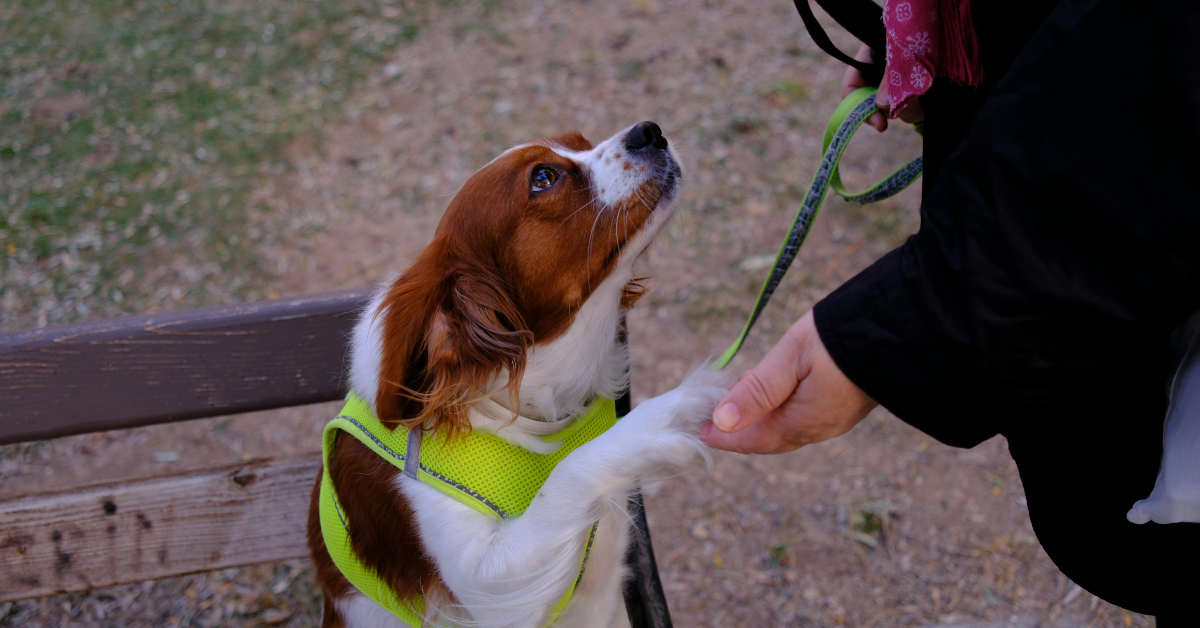
Depending on your level of anxiety and how much physical touch benefits you, DPT can be the dog lying on your lap or something as simple as the dog holding out their paw.
2. Interrupting Self-Harm
Another big one is interrupting self-harm, which can be one of the worst symptoms of anxiety. If someone is harming themselves, service dogs can stop this activity before it leads to permanent damage, or worse, death.
Aside from self-harm, service dogs for anxiety can help you manage nervous tics and other destructive behaviors.
3. Retrieving Items
Service dogs for anxiety will also retrieve items for their handlers. You’ll find that they can find medications and bring them to their handler when it’s time to take them. As long as you train them to understand your routine, this should never be an issue.
Aside from medication, service dogs for anxiety can also grab stuffed animals and other belongings that may make people feel more comfortable during anxiety attacks. In fact, a service dog for anxiety can even find help for you if something happens out in public, so they can retrieve just about anything you may need.
4. Creating a Barrier
Anxiety isn’t just nervous thoughts or panic attacks. Sometimes, there’s a social element to it, and service dogs can also help with this aspect of anxiety. This is due to the fact that service dogs can create a barrier between you and a crowd or another person. In some situations, this can help someone remain calm.
Another way that service dogs for anxiety can help in social situations is simply by being a conversation starter. After all, if you have a dog around, there’s a good chance that someone will strike up a conversation with you.
5. Preventing Panic Attacks
If you’re someone who struggles with panic attacks, service dogs can be trained to prevent them. This also works for people who have post-traumatic stress disorder. Service dogs can prevent panic attacks by detecting early signs and escorting someone to safety.
Panic attacks can also be prevented by clearing a room before you enter. For example, if there are situations where you might have a panic attack, a service dog can clear the room for you.
Our Final Thoughts on Service Dog Tasks for Anxiety
There are many service dog tasks for anxiety, and while we covered the most common ones in this guide, there are many more out there. In fact, the tasks that your service dog learns depend on your unique circumstances, so if you don’t see a task that you need help with, that doesn’t mean a service dog isn’t for you.
That said, make sure you speak with a licensed mental health professional (LMHP) to determine if you qualify.
*This is a collaborative post. For further information please refer to my disclosure page.
Related Posts:
What To Do If You Can’t Enjoy The Gym

Gyms are incredibly resourceful and useful spaces. Even if you have an at-home workout routine, it’s generally recommended that you Read more
Unconventional Serving Methods: Redefining the Way Food Is Presented

Have you ever taken a bite of a dish that not only satisfied your taste buds but also left you Read more
Why Regular Check-Ups at a Medical Centre Are Essential for Preventive Care

Health issues can be neglected in today's hectic society until they become too serious to ignore. However, this reactive approach Read more
5 Questions To Ask Before Hiring a Florida Personal Injury Lawyer for Your Case

In the wake of Florida's 396,478 total crashes in 2022, which led to 3,289 fatalities and 162,955 injury crashes, the Read more