
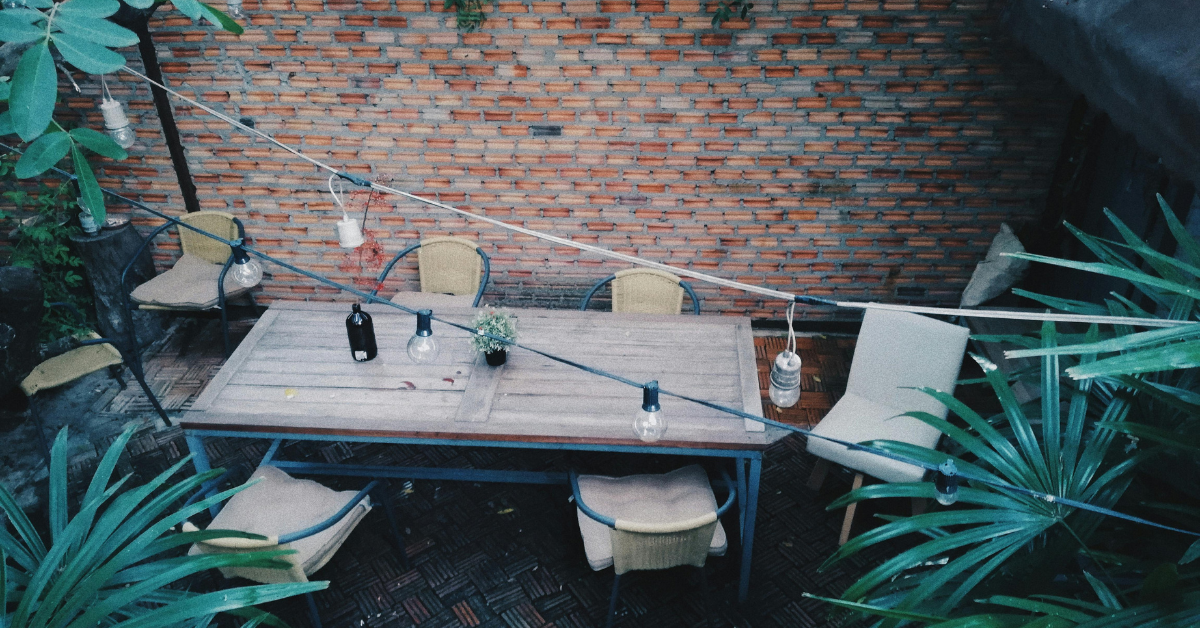
Smart Ways to Make the Most of a Small Garden
*Collaborative Post
A small garden can feel like a challenge. Space is tight, and everything needs to earn its place, be it bikes, bins, pots, the BBQ that barely fits — suddenly there’s no room to move, never mind stretch out on a chair. But even the tiniest garden can feel like its own little haven if you plan with intention.
The goal isn’t to make the garden bigger. It’s to make it work harder.
Every corner is doing something, every inch supporting how you want to live, whether that’s morning coffee outdoors, a quiet chair in a sunny patch, or somewhere to relax at the end of the day.
Here are some tips on how to style a small arden so it feels open, comfortable, and genuinely worth stepping outside for.
Start with The Space You Have
Before you start changing anything, take a close look at the space you have. Not the space you want or what you’re trying to change. What you’re actually working with.
Notice how the garden changes and behaves in different light, at different points of the day, etc.
- Where does the sunlight fall first thing in the morning?
- Which areas stay shaded or cool later on?
- Is there a natural route from the house through to the garden?
- What parts do you never actually use?
Small gardens don’t give much room for mistakes because the planning stage matters a lot here. Once you understand the space you have and how it works, you can adapt it to support the way you want to use it.
A simple rule: decide on one main purpose for the garden, then make everything support this. If you want seating for two, prioritise this. If you want a small space for growing herbs or veggies, make everything work around this. A clear goal helps function and avoids chaos.
Include Vertical Space
Small gardens only feel cramped when everything happens at one level. Walls, fences, and sheds — these are opportunities for height, not barriers closing you in.
Consider:
- Wall-mounted shelves for plants and lanterns
- Trellis panels with climbers to soften the boundaries
- Tall narrow planters that draw the eye upwards
- Slim screening to add privacy without bulk
Different heights create layers — and layers create the sense of a larger space. Lifting greenery up frees the floor for furniture and open movement. It also keeps the garden feeling more “garden” and less “paved yard”.
Pick Furniture That Fits
Furniture is usually the difference between a garden that gets used and one that stays unused. In a compact layout, you want pieces that support your lifestyle without taking over the footprint.
Good choices for small gardens include:
- Compact bistro sets for everyday seating
- Corner benches tucked neatly into one spot
- Folding or stackable chairs for flexibility
- Storage benches that hide cushions, throws, or games
If you’re upgrading what you have or need ideas, check out ranges like Hartman garden furniture to see what could work in your space and what options are available.
A good rule of thumb is: if you can sit comfortably and move comfortably, you’re halfway to a usable garden.
Create Simple Zones
A single open area can actually make a garden feel smaller. Breaking the space into “mini areas” gives purpose to every corner — and makes the environment more interesting.
Easy ways to “zone” include:
- A rug under seating to define a lounge spot
- Planters marking the edge of the dining area
- A different surface (decking, gravel patch) to break up the paving
- A narrow raised bed running down one side
Zones don’t need walls; they just need tiny cues that tell you what each part of the garden is for.
Lighting
Small gardens can be completely transformed thanks to lighting. It creates depth and atmosphere, and suddenly the garden isn’t “outside” as a separate space — it’s part of your living area now.
Great lighting choices and design could look like:
- String lights along a fence or pergola beam
- Solar lanterns near seating
- Subtle spotlights angled at plants or features
Not you don’t want things too bright — the aim isn’t full floodlight illumination here — it’s to make the outside glow, to make it feel warm, inviting a space you can relax in on a hot summer’s day or a warm autumn evening with a gentle breeze blowing through.
Keep It Simple
One way to make a small space feel more cluttered and even smaller is to introduce too many colours, patterns and designs. Less is more here, so you need to keep things simple.
Pick a limited palette and repeat it — it brings calm and makes the area feel intentionally designed.
Try:
- One main paving or decking texture
- One or two fence colours (dark tones create depth)
- Green as the foundation, with one or two accent shades
Matching pots or even repainting existing ones helps unify everything visually. That cohesion can make a space feel a lot bigger than it is.
Season Plants
If you’re having plants in your garden, choose ones that last for more than one season. You need things that say and give you more bang for your buck here.
Evergreens that add shapes through winter, long-blooming perennials to add colour, compact fruit trees or shrubs for added interest points, or herbs for scent and practical use.
Don’t avoid the beds either. A few strong choices look more intentional than lots of small pots squeezed into every spare gap.
If a plant outgrows the space — it’s not failure — it’s proof the garden is thriving. Just swap it out for something better suited.
Declutter Properly
Visual clutter can shrink a garden fast. If you have things like toys, tools, or bins in sight constantly, then your eyes stop noticing anything else and hone in on these things.
Try to use smart solutions like:
- A slim storage bench in the same shade as the fence
- A bench with a cushion storage built in
- A weatherproof box tucked behind a planter
- A screened or trellis of hidden bins
When everything has a home, it becomes much less noticeable, and the garden looks instantly neater and is a more enjoyable space.
*This is a collaborative post. For further information please refer to my disclosure page.
Related Posts:
7 Thoughtful Valentine’s Day Gift Ideas to Celebrate Love in All Its Forms

With Valentine’s Day just around the corner, the excitement of celebrating love fills the air. Imagine the joy on your Read more
Bringing Nature Indoors

*Collaborative Post Is there anything more beautiful spending a summer afternoon out amongst the garden? With flowers and lush greenery Read more
Legal and Emotional Insights for Dads Facing Civil Partnership Dissolution

Facing a civil partnership dissolution can be a challenging time, especially for dads who may be uncertain about the legal Read more
How Parents Can Benefit from Modern Dental Implants

Missing teeth can disrupt more than just your smile. For parents balancing family life, work commitments, and social moments, the Read more