
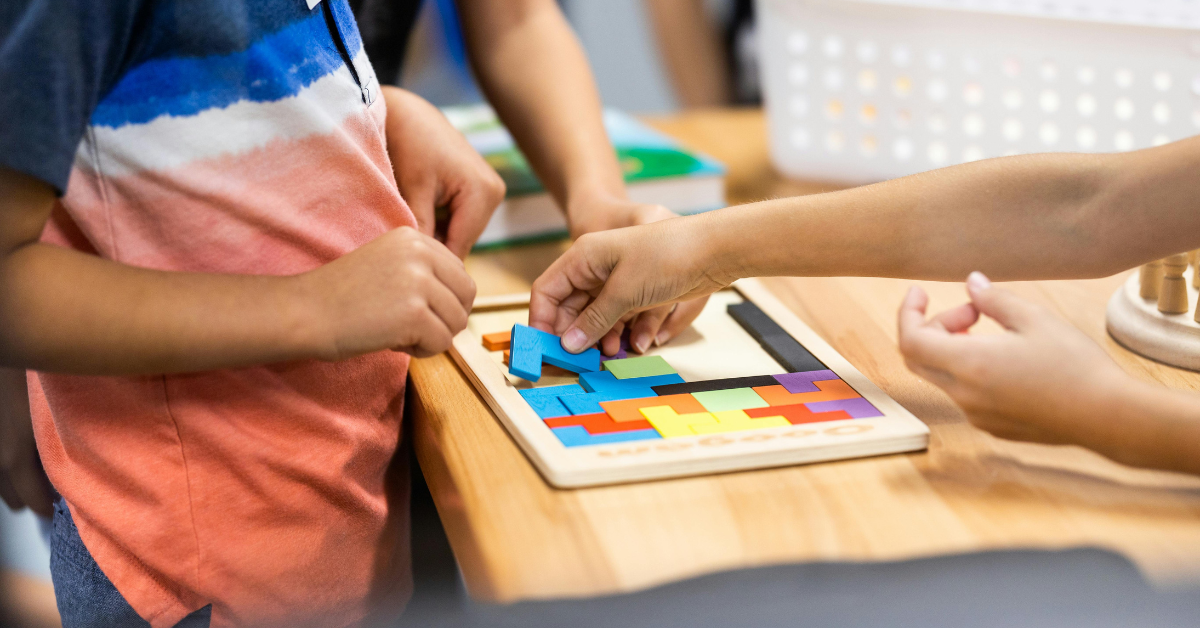
Creating Spaces Where Every Child Can Learn, Grow, and Shine
*Collaborative Post
Children deserve learning environments catered toward their unique potential. This is difficult in a world where teachers are overworked, overwhelmed, and under-supported.
Complicating things further is the sheer magnitude of the task. To truly create a space for a child, their physical, emotional, social, and educational needs need to be taken into consideration.
Building effective learning spaces requires collaboration between educators, parents, and possibly professionals like social workers and psychologists. It’s a tall order, but when executed properly, it can result in more inclusive and impactful classrooms.
In this article, we take a look at what it takes to create spaces for every child to learn, grow, and shine.
Recognizing Children’s Right to Thrive
Education has, for many years, catered best to students who are able to meet a fairly rigid set of criteria. This includes:
- A stable home environment that supports independent learning
- An ability to process information well through reading and writing
- Consistent attendance for 35 to 40 hours a week, nine months out of the year
- The ability to handle deadlines responsibly and work free of distraction
In a perfect world, all students would be able to meet these ideals, but the reality is not so simple. For one thing, there are lots of students who have to balance complex personal responsibilities on top of academic ones.
For example, many children take care of younger siblings at home or simply have no one around to help them with homework.
There needn’t necessarily even be any dire personal circumstances. It’s very possible that a struggling student simply doesn’t learn best under the circumstances they’ve been given.
Children not prone to sitting still or not at their best with the book in front of their eyes and a pencil in their hands have historically had little in the way of options.
More inclusive and carefully designed learning environments recognize the wide needs of modern students and design systems to meet them.
Inclusivity in Modern Education
First, what does it mean for an educational environment to be inclusive? Naturally, most people understand that personal characteristics like race, religion, gender, and sexual orientation should not be barriers to learning.
Most school settings are in this way at least diverse—friendly in theory and hopefully in practice.
It’s harder to take into account how diverse learning styles should be factored into education.
People with disability-related barriers to learning are eligible for special education services. There are entire structures and legal frameworks designed around ensuring that they have access to what they need.
That’s a great start, but it doesn’t take into consideration the full scale of variation in learning.
Some people learn best through visual stimulation. Other people learn best through lectures.
There are students who benefit from a tactile experience. How can educators accommodate twenty-five different learning styles when they barely have the bandwidth to ensure that everyone is simply keeping up with their assignments?
That’s a question for which there is no singular or entirely satisfying answer. However, digital technology paired with evidence-based pedagogy is slowly but surely helping to create a more individualized learning environment for students all over the country.
What Digital Technology Can Do
There are now many digital learning programs that adapt to student skill level and learning preferences. These self-guided learning modules adjust the difficulty level based on how the student is answering questions.
If they get a lot of answers right in a short amount of time, the difficulty level will increase. If they struggle, the difficulty level will decrease. The idea is not to avoid challenging students, but to meet them where they are and establish a clear baseline so teachers can work more specifically to help them improve in the areas where they struggle.
These programs are more engaging for students, who have the opportunity to learn in a way that is stimulating and rewarding. It’s also simply more efficient, as their needs are being met in a way that no teacher could realistically match manually.
Taking Social and Emotional Well-Being Into Account
There’s now a bigger emphasis than ever on acknowledging the way that social and emotional well-being contributes to education in general—and also to human development.
Many schools now employ social workers and psychologists who work with individuals struggling with specific situations, and often with entire classrooms full of students who could simply benefit from more social-emotional awareness.
Children are encouraged to monitor their emotional experiences and even report them to instructors. This accomplishes several things. For one, it creates a system where the connection between interior experiences and exterior outcomes is thoroughly recognized. It also helps ensure that when there are problems, they’ll be noticed and addressed quickly.
Process
Progress has been made in the context of acknowledging how social and emotional factors influence education. That said, the situation is complicated. Recent data shows that test scores in the United States actually indicate a decline. Determining why is difficult.
Many people believe that children are still experiencing the impact of COVID-19. On the other hand, there has been a narrowing of the achievement gap between people of different races and economic backgrounds, which is very much a sign that individualized learning plans with a priority on supporting diverse learning are working.
The thing about education is that standards change constantly, and best practices evolve routinely to take into account new technologies and data. It’s exactly for this reason that educators in the United States have a continuing education requirement.
All this to say that education is on a good track, but challenges are still very much prominent, and practices are constantly evolving. If you’d like to be part of the change, consider a career in education or even social work. Both vocations play a significant role in shaping how students experience school and grow into successful, productive, healthy adults.
*This is a collaborative post. For further information please refer to my disclosure page.
Related Posts:
Sleep Deprivation Is A Bitch!

You may have noticed that I have moaned about being tired quite a lot in the last year, yeah? Well, Read more
What You Need to Know About Occupational Therapy for Your Children
Did you know that one in four kids enters kindergarten with speech, fine motors skills or gross motor skills delays? Read more
You’re Taking Reusable Nappies Abroad With You??!!!

Since we started using reusable nappies last June, I haven't used a single disposable one. Not when we went away Read more
Giveaway!! Raising Colic Awareness with Infacol and The White Company

*Collaborative Post Infant Colic, well what can I say? After months of our baby struggling with pain, not being able Read more