
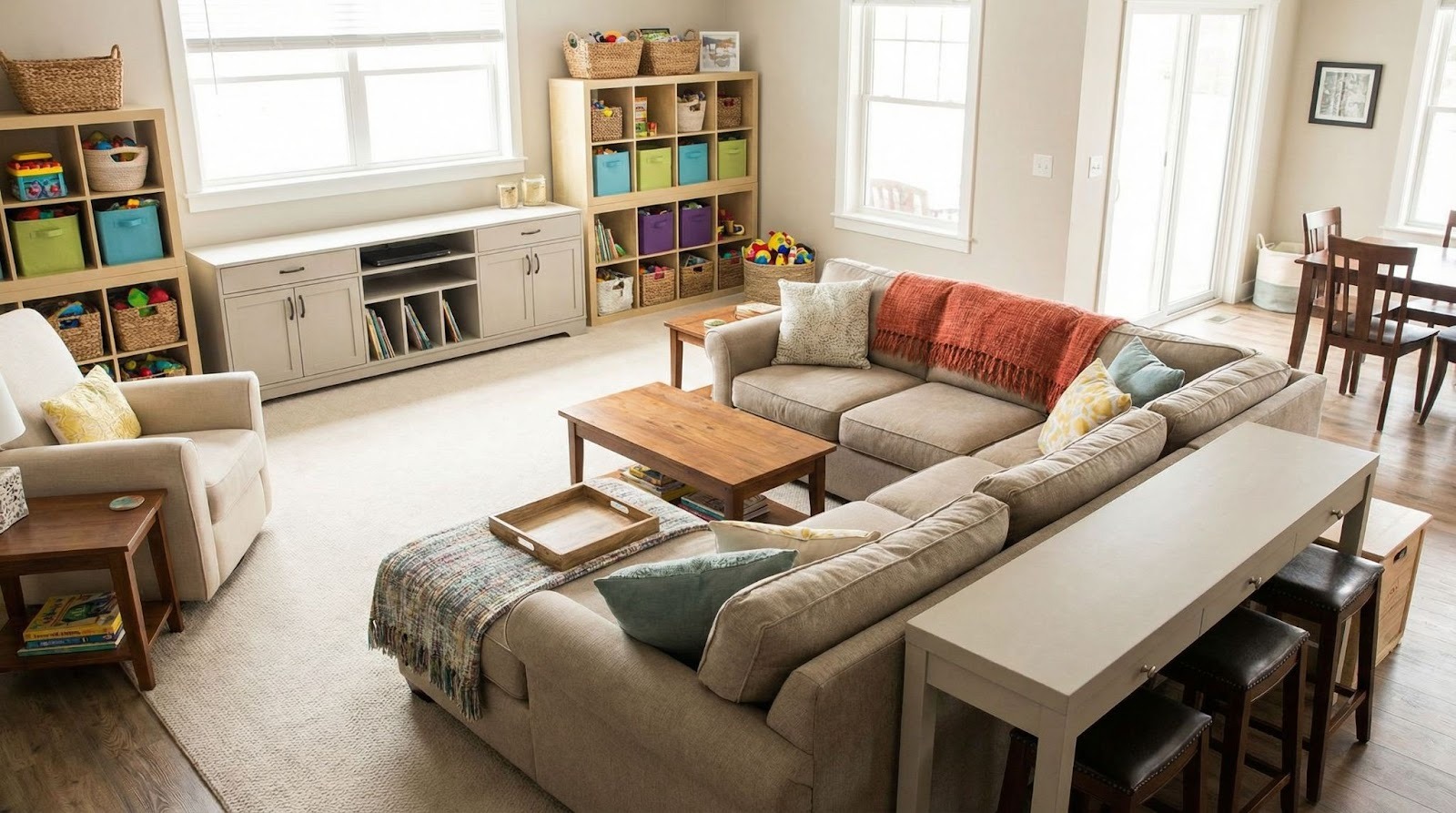
Planning Family Room Layout: How 3D Visualization Helps Parents Create Functional Spaces
*Collaborative Post
Rachel’s living room looked perfect in her imagination. She’d measured carefully, chosen a sofa that fit the budget, and felt confident about her purchase. When the delivery arrived three weeks later, the sofa overwhelmed the space completely. It blocked the path to the kitchen, prevented the kids from reaching their toy storage, and made the room feel cramped rather than cozy. Returning it meant losing £95 in delivery fees. That expensive mistake taught Rachel to never again rely on measurements alone when planning family spaces.
Every parent knows the challenge. You need furniture that works for daily life with children, fits your actual space, and doesn’t break the budget. Traditional planning methods offer little certainty. Floor plans show dimensions, but can’t predict whether your seven-year-old can still reach his Lego storage or if the new coffee table creates an obstacle course during evening play time.
Virtual room planning solves this problem. Before spending money on furniture, you can see exactly how pieces fit in your real space and whether they work for your actual family life. This approach prevents expensive mistakes, reduces daily frustration, and creates family rooms that genuinely function for busy households with active children.
Why Family Room Planning Matters
According to research from the Royal Institute of British Architects, poorly planned living spaces create daily stress for families. Children need clear paths to their belongings, parents need functional furniture arrangements, and everyone benefits from rooms that support rather than hinder daily routines.
Yet most parents plan family rooms reactively. They buy furniture when old pieces break or become too small, hoping measurements work out. This approach leads to predictable problems. Sofas block circulation paths. Coffee tables create barriers to toy storage. Entertainment units prevent natural play areas. Each issue compounds daily frustration.
The financial impact hurts, too. Quality family furniture costs hundreds of pounds. When pieces don’t work properly, parents face difficult choices: live with daily annoyance or lose money replacing purchases. Neither option feels good.
Common Family Room Mistakes
Parents make predictable errors when planning family living spaces. Understanding these pitfalls helps you avoid them.
Furniture That Blocks Family Flow
Children move constantly through living rooms. They retrieve toys, access craft supplies, reach bookshelves, and navigate between spaces dozens of times daily. Furniture that looks fine in showrooms often creates obstacles in real family homes.
That beautiful three-seater sofa might force your daughter to squeeze behind furniture to reach her art supplies. The ottoman that seemed perfect could block the direct path from the living room to the kitchen, adding frustration to every snack run. These circulation problems compound throughout each day.
Ignoring Children’s Access Needs
Independence matters for child development. When children can access their belongings without parental help, they play more independently and learn responsibility. Yet parents often position storage in ways that require adult assistance.
Toy boxes placed behind sofas force children to ask for help retrieving toys. Bookshelves positioned near furniture corners create awkward access angles. These seemingly minor issues create dozens of daily interruptions for busy parents.
Underestimating Multi-Purpose Needs
Family rooms serve multiple purposes simultaneously. Children play while parents work. Homework happens alongside dinner preparation. Weekend family movie nights require different arrangements than weekday evenings. Furniture that only works for one activity creates constant rearrangement needs.
Parents who plan for single-use items find themselves moving furniture regularly or living with suboptimal arrangements. Neither option supports family life well.
How Arcadium 3D Software Creates Better Family Spaces

This 3d room designer from Arcadium transforms family room planning from guesswork into certainty. You create accurate digital versions of your living space using real measurements, then test furniture arrangements before making any purchases. This visualization reveals exactly how rooms work for your actual family life.
Testing Furniture Scale and Placement
Arcadium renders rooms in precise proportions. When you place a sofa in your virtual living room, it appears exactly as large as it will in reality. This accurate scale immediately reveals whether furniture fits comfortably or overwhelms your space.
You can test multiple arrangements before deciding. Try the sofa against the main wall, then test it perpendicular to the window. See how different coffee table sizes affect circulation. Verify that the entertainment unit doesn’t block the radiator. Every question gets answered before spending money.
Verifying Children’s Access
Virtual planning shows whether children can actually reach their belongings. Position toy storage in your digital room, then verify that kids can access it without squeezing behind furniture or navigating tight corners. Test whether bookshelves remain accessible after adding that new armchair.
Arcadium’s 3D perspective reveals these practical details that traditional floor plans miss. You see the actual paths children will take through rooms, identifying potential obstacles before they create daily frustration.
Planning for Multiple Activities
Virtual planning helps balance competing family room needs. Create a homework configuration showing where your son’s desk fits. Then test whether the same space works for weekend movie nights with the whole family. Verify toy storage doesn’t interfere with adult seating areas.
This multi-scenario testing ensures furniture arrangements support all family activities rather than optimizing for just one use.
Practical Planning for Different Family Needs

Family rooms must adapt as children grow and needs change. Virtual planning helps create spaces that work now and later.
Families with Young Children
Toddlers and young children need significant floor space for active play. Use Arcadium to verify furniture arrangements leave adequate room for play mats, building blocks, and running around. Test whether toy storage positions allow independent access without creating tripping hazards.
Ensure coffee tables have rounded corners in your digital model, positioned where little ones won’t run into them during play. Verify that entertainment units can be secured safely and don’t block supervision sightlines while you’re preparing meals.
School-Age Children and Homework Spaces
School-age children often complete homework in family rooms where parents can provide support. Virtual planning helps identify where desks or homework tables fit without disrupting other family activities. Test lighting positions, ensuring adequate brightness for evening studying without creating glare on television screens.
Verify homework areas remain accessible even when siblings play nearby. Ensure storage for school supplies doesn’t require constantly moving furniture to reach textbooks or art materials.
Multi-Child Households
Multiple children create complex space requirements. Different ages need different furniture access. Siblings might share storage but need separate activity areas. Virtual planning helps balance these competing needs.
Test whether your seven-year-old’s Lego table interferes with your eleven-year-old’s reading nook. Verify shared bookshelves allow both children to reach their levels comfortably. Plan toy rotation storage that works as older children outgrow items and younger ones acquire new interests.
Preventing Expensive Furniture Mistakes
Family budgets rarely accommodate replacing furniture that doesn’t work. Virtual planning protects your investment by ensuring every purchase actually functions in your space.
Test expensive pieces thoroughly before buying. That £600 sectional sofa represents significant family spending. Verify it fits properly, allows good circulation, and doesn’t block children’s access to their belongings. Ensure it works for both daily family life and occasional entertaining.
This due diligence prevents Rachel’s frustrating experience. She would have discovered her sofa blocked the kitchen path and prevented toy storage access before delivery, giving her the opportunity to choose different furniture or arrangements.
Virtual planning also helps identify where you can save money. Perhaps that expensive coffee table isn’t necessary if a simpler ottoman serves better for your family’s needs. Maybe you need more storage and less seating. Testing options virtually reveals the best allocation of limited budgets.
Reducing Daily Family Stress
Well-planned family rooms reduce daily friction. When children can access toys independently, parents field fewer requests for help. When furniture arrangements support natural circulation, everyone moves through spaces smoothly. When homework areas work properly, evening studying creates less stress.
These improvements accumulate throughout each day. Eliminating a dozen minor frustrations creates a noticeably calmer family life. Parents enjoy their living spaces rather than fighting against poor layouts.
Virtual planning makes this stress reduction accessible. The hours invested in testing layouts prevent years of daily annoyance. Your family deserves spaces that support rather than hinder everyday life.
Creating functional family rooms requires balancing children’s needs with adult preferences, activity requirements with furniture constraints, and desires with budgets. Traditional planning methods rely too heavily on hoping measurements work out and furniture functions as imagined.
Virtual room planning tools like Arcadium remove this uncertainty. You see exactly how furniture fits and functions before spending money. You test whether arrangements support your actual family life rather than imagined ideals. You make confident decisions knowing everything works properly.
Before buying that new sofa, bookshelf, or coffee table for your family room, invest time in planning virtually. Test layouts, verify access, and ensure furniture supports your children’s independence and your family’s daily routines. The planning effort prevents expensive mistakes and creates spaces that genuinely work for busy family life.
*This is a collaborative post. For further information please refer to my disclosure page.
Related Posts:
How To Make A Natural Homemade Window Cleaner

If you have been following me for a while, you will know that my eco journey has gone down a Read more
Why Professional Photo and Video Quality Matters in Real Estate Listings

Professional photo and video quality matter in real estate listings as they help buyers form an immediate connection to a Read more
8 Tips To Make Your Home Cozier

The home is central to your family. It’s where everyone meets after a long day and discusses their school or Read more
In Search Of Space: Interior Innovations For Growing Families

*Collaborative Post There comes a time when many families outgrow their homes. If you’re welcoming new additions to the household Read more