When Do Babies Start Talking? A Month-by-Month Guide
*Collaborative Post
Communication is important for humans, as it allows them to express themselves. Both verbal and non-verbal communication are important for humans. Only shortly after birth, babies are known to start talking non-verbally, as they express their emotions and physical needs with cries or movements. It is only after a year that babies communicate verbally. The first words of babies are awaited by the parents, who are often waiting for when the baby will start talking.
When do babies start talking is a common question that often comes to the minds of parents. However, most parents are unaware that right from their birth, babies listen and, in their own way, learn the rules of the language that later enable them to communicate.
Month-by-Month Guide to Babies Talking
The speech development journey of babies is a long one, as slowly and steadily, they learn to speak and develop an understanding of the language and sounds around them. Here’s a month-by-month guide on when babies start talking.
- From Birth to Six Months
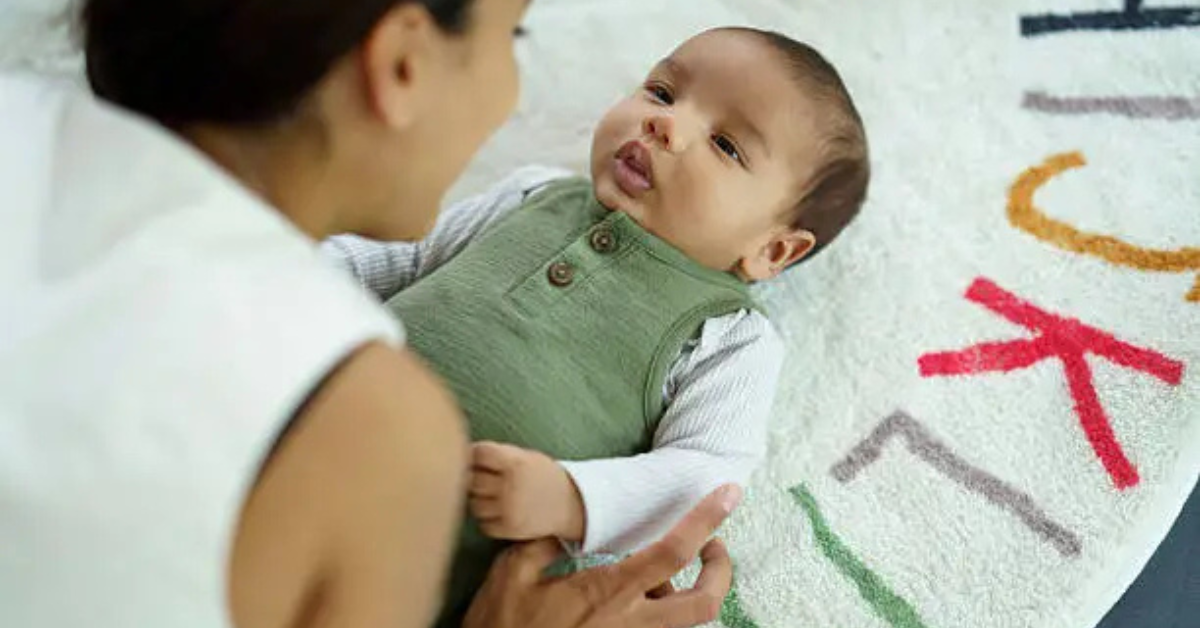
Babies listen right from day one. They try to associate the different sounds they hear. During these months, babies’ mode of communication is crying; they will cry for anything and everything. This is their way of making parents aware that they need something.
- Four to Six Months
Babies often start to babble at this time. They might even make consonant sounds. In these months, they usually focus on and respond to familiar words like mom, dad, or even their own name.
- Seven to 12 Months
During these months, babies will start saying some words and repeating words. They will also start to point out things and make gestures for some actions. Additionally, they may start speaking some words that they have invented on their own. During these months, the baby understands familiar and everyday words and may even recognize the tone of the voice. When babies are 12 months old, they start saying common words like bye-bye, mama, doggy, etc.
- 13 to 18 Months
Now that the baby has started saying common words, their vocabulary will continue to grow. They will experiment in different ways with one-line questions and find delight in saying no. Moreover, they will start understanding the rudiments of grammar and one-line instructions.
- 19 to 24 Months
This is a period of language explosion for babies. The vocabulary that they have slowly built will enable them to use a combination of words and communicate. They will also associate a specific shape with different objects. Additionally, this is the time when they will closely observe whoever is talking around them and try to understand and absorb everything that is being said.
- 25 to 30 Months
In these months, babies develop complex ideas. They can also control their tongue tips and speak clearly. They will be able to use two-word sentences for communication and understanding.
- Three Years
By this age, babies can convey several ideas by using a wide range of words. The babies try to remember ideas that they have observed and use phrases from those ideas.
- Four to Five Years
In this age, babies can hold extensive conversations by using an array of words and complete, detailed sentences. They can also express their thoughts easily.
To Sum It Up
Parents are often amazed at when babies start talking, as they witness their speech development from using non-verbal communication at birth to complete sentences by the age of five to express their thoughts and emotions.
*This is a collaborative post. For further information please refer to my disclosure page.
Related Posts:
From Colds to Lice: How Parents Tackle Everyday Health Headaches

Parenting is wild, right? One day everything’s chill and the next your kid’s coughing, sneezing, or scratching their scalp like Read more
Why We Won’t Be Potty ‘Training’

When I was a first time Mum, I went along to quite a few baby groups, I listened to other Read more
Am I getting it right?

Am I getting it right? A question we all ask ourselves repeatedly from the moment we take our precious bundles Read more
How to Support a Hyposensitive Child at Home
When a child seeks extra movement, deep pressure, or loud sounds, it may mean their sensory system is under-responding. This Read more