
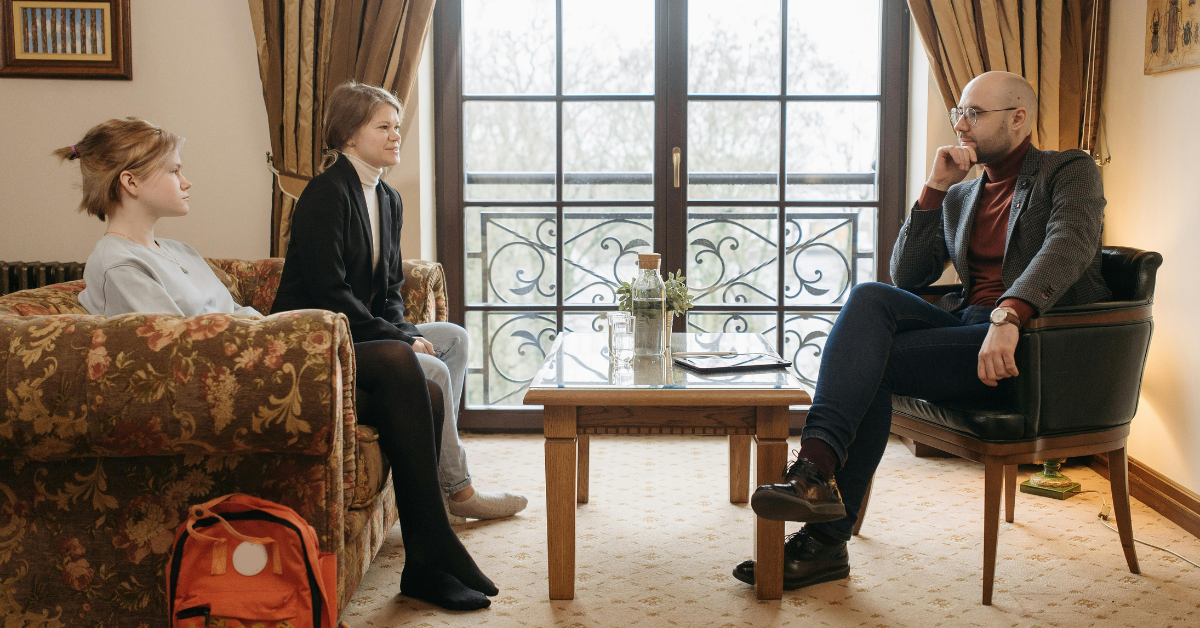
Turning Compassion Into a Career: Helping Families Heal and Grow
*Collaborative Post
Somewhere between the slammed door and the long silence that follows, families break. Not always loudly. Sometimes it’s subtle—a glance that never lands, a conversation that keeps looping and going nowhere.
If you’ve ever noticed that moment and felt the pull to help, really help, this path probably already has its hooks in you.
Compassion as a career isn’t abstract or soft-edged. It’s practical. It’s heavy. And oddly enough, it’s hopeful. This article digs into what it actually means to turn care into craft, and why family-focused therapy keeps drawing people in—maybe you, too. Stick with me.
Why Families Are Struggling More Than We Admit
It usually shows up in small ways first.
Missed glances. Short answers. Everyone in the same room, scrolling, not quite there. Families today aren’t just “busy.” They’re stretched to a thin, uncomfortable edge.
The numbers back that up. In 2021, the National Institute of Mental Health (NAMI) reported that 22.8% of U.S. adults experienced a mental illness. That weight doesn’t stay contained. It seeps into kitchens, carpools, and late-night arguments over nothing in particular.
Then there’s money. Screens. The hidden fear of divorce. The CDC still lists U.S. divorce rates at roughly 2.4 per 1,000 people, but that stat skips over the couples who stay together while quietly drifting apart. Houses that look calm from the street. You’ve seen those.
No finger-pointing here. This is about patterns. And patterns—slowly, unevenly—can change.
The Role Family Therapy Plays in All This
Family therapy isn’t just couples on couches talking about feelings.
It’s systems work. You zoom out. You notice how one person’s anxiety reshapes an entire household, or how a child’s behavior is often the loudest symptom of something unspoken. That perspective matters more than people realize.
Training equips you with the skills to see this from a better perspective. Take a licensed marriage and family therapist program, for instance. Students are taught to see families as systems, not collections of symptoms.
Institutions like Saint Mary’s University of Minnesota emphasize supervised clinical practice and relational models—less “What’s wrong with you?” and more “What keeps happening between you?” That shift alone changes how you think and listen.
What Makes This Work Different From Other Mental Health Paths
There’s overlap, sure. But the lens is different.
Here’s a quick comparison that clears some of the fog:
| Focus Area | Individual Therapy | Family Therapy (LMFT) |
| Primary Lens | Individual thoughts & behavior | Relationships and systems |
| Typical Clients | One person | Couples, families, groups |
| Core Question | “What’s happening inside you?” | “What’s happening between you?” |
| Training Emphasis | Personal mental health | Relational dynamics |
Neither is better. Just different tools for different fires.
The Emotional Reality No One Puts on the Brochure
Let’s be honest for a second.
This work can knock the wind out of you. You’ll hear stories that linger on the drive home. You’ll second-guess sessions. Replay sentences. Wonder if you said the wrong thing. Happens to everyone, even the seasoned ones.
But there’s another side that doesn’t get enough airtime.
Watching a family slowly relearn how to talk does something to you. You notice it in small ways. A teen finally making eye contact. A couple laughing, surprised they still can.
Those moments land. And they add up.
What Draws People In—and Keeps Them There
Most don’t choose this path for prestige. Or money. Or ease. (It’s none of those.)
They choose it because they’ve seen what silence does. Or conflict. Or avoidance. Maybe in their own family. Maybe someone else’s. And they want to interrupt that cycle.
You learn to sit in discomfort without rushing it away. To listen for what’s not said. To hold hope for people who can’t find it themselves yet.
That’s a skill. One you build over time.
A Career That Changes You, Too
Here’s the part no one tells you upfront: you won’t come out the same.
You’ll communicate differently. Argue less defensively. Pause more. Notice dynamics everywhere—at dinner tables, in waiting rooms, even in traffic. Kind of wild, honestly.
And while you won’t fix every family (no one does), you’ll help some heal enough to keep going. To grow. To try again tomorrow.
That’s not a bad way to spend a life, is it?
*This is a collaborative post. For further information please refer to my disclosure page.
Related Posts:
5 Ways To Marble To Your Home for A Timeless Look

Are you yearning to infuse your home with a touch of opulence? Look no further than the timeless allure of Read more
7 Reasons You Need More Natural Light In Your Life

Natural light exists independently and provides many benefits. By embracing what the sun offers, you can see physical, mental and Read more
8 Tips for Growing Your Money Without Compromising Your Daily Expenses

When you get your pay, do you catch yourself thinking: “I’ll start saving when I have more money”? Indeed, sometimes Read more
Top Tips For The Spring Clean

*Collaborative Post With Summer creeping ever closer, it’s time once again to look around your home and make your plans Read more