
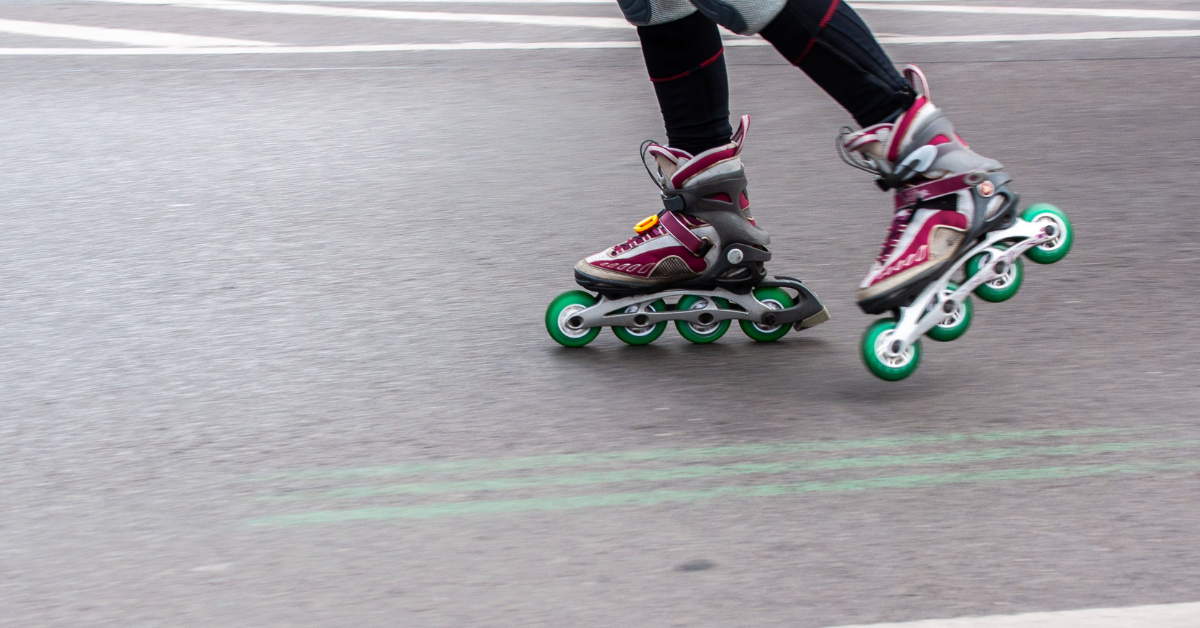
Swapping the Car for Inline Skates: A Low-Carbon Way to Get Around Locally
*Collaborative Post
Families across the United Kingdom rely heavily on vehicles for short, repetitive journeys. The morning school run and quick visits to the local grocer frequently involve turning an ignition key, yet depending on cars for distances under two miles generates a disproportionate spike in local carbon emissions. Government transport data reveals that nearly a quarter of all trips made by residents are under a single mile. Replacing these micro-journeys with active alternatives offers an immediate way for households to shrink their carbon footprint. While cycling and walking remain the standard choices, many are discovering that strapping on a pair of inline skates provides a surprisingly efficient mode of transport.
The hidden environmental cost of short local journeys
Transitioning to sustainable travel means addressing the micro-journeys that dominate modern parenting schedules. Escorting children to primary school or grabbing supplies from a high-street grocer presents an ongoing challenge for families trying to avoid vehicle dependency. Equipping oneself properly allows residents to navigate local paths with ease. For those adopting this commute, the adult inline skates at Euroskateshop provide the necessary ankle support to negotiate uneven pavements. Moving away from cars for these brief local trips has an outsized impact on reducing neighbourhood air pollution. “Active travel is essential for lowering urban emission clusters,” notes Dr Rachel Aldred, Professor of Transport at the University of Westminster. Cold car engines operate inefficiently and release higher levels of exhaust fumes during the first few miles. When dozens of families converge on a school gate in combustion-engine vehicles, the resulting microclimate becomes heavily polluted. Choosing an active travel method eliminates this localised emission spike while also lessening the strain on municipal infrastructure, reducing road wear, and easing residential congestion.
Making active transit a practical part of family life
Gliding along footpaths offers a faster pace than walking, enabling busy households to stick to strict morning timetables without generating carbon exhaust. When adults adopt wheeled transit instead of reaching for the car keys, the entire family experiences a shift in perspective. Children observe their guardians taking tangible steps to protect the environment, turning abstract concepts of climate change into visible daily actions. Leaving the estate car parked in the driveway also simplifies logistics. Dropping children at the school gates often involves navigating congested zones and fighting for temporary parking spots; embracing active transport bypasses these high-stress areas entirely. Parents can glide right up to the pedestrian entrance, complete the handover, and continue their journey to a local cafe or public transport hub. This fluidity transforms the morning routine from a tedious chore into an energising outdoor activity.
Navigating public pavements and cycle paths safely
Safety and route planning are top priorities for families transitioning to alternative modes of local transit. Under United Kingdom transport guidelines, individuals using human-powered recreational wheels are categorised alongside pedestrians and should generally utilise footpaths rather than the main road carriageway. Finding the right route makes a significant difference when establishing a sustainable commuting habit. The National Cycle Network provides thousands of miles of traffic-free paths across the country, many of which feature smooth tarmac surfaces that accommodate wheeled transport well. Securing the correct protective gear ensures confidence on municipal concrete; helmets, wrist guards, and knee pads are absolute essentials for adults traversing busy suburban environments. Mapping the journey beforehand to avoid steep hills or cracked pavements allows for a smoother experience. Over time, residents naturally identify the flattest and most direct routes connecting their home to local parks and community hubs.
Building a lasting eco-conscious travel routine
Forming a sustainable travel habit requires gradual integration rather than an overnight overhaul. Environmental psychologists frequently advise starting small to create permanent shifts in transport choices. Selecting one or two days a week to leave the engine dormant is an effective strategy. A dry, clear Tuesday morning serves as an ideal starting point for swapping the usual drive for a zero-emission alternative. Keeping equipment stored neatly near the front door acts as a daily visual prompt, reinforcing the commitment to lower domestic emissions. As the physical fitness required for active commuting builds, many individuals find themselves extending their range well beyond the initial one-mile radius. Travelling through the community under one’s own power reconnects residents with their surroundings, uncovering local businesses and nature spots that are easily missed through a car window. Ultimately, ditching the internal combustion engine for local errands creates a cleaner, quieter, and more connected neighbourhood environment.
*This is a collaborative post. For further information please refer to my disclosure page.
Related Posts:
Why Absolutely Anybody Can Be Eco

Being more eco is really starting to catch on and the little eco-warrior inside of me is doing a very Read more
How To Create a Birdwatching Hub in Your Own Back Garden

Do you enjoy a bit of birdwatching? Maybe just through your window at home? Or perhaps you are a hobbyist Read more
Everything You Need To Know About Using Reusable Wipes

*Affiliate Links I feel that I have covered so much on cloth/reusable nappies but I haven't gone into much detail Read more
Hippynut Reusable Nappy Review

*Gifted Product We made the switch to cloth nappies over 2 years ago now and I will still say that Read more