
The Benefits of Invisalign for Busy Family Life
*Collaborative Post
Clear aligners are a common option for parents and teenagers who want discreet orthodontic treatment that fits around busy routines. For families, treatment simplicity, comfort, and minimal disruption are key factors in choosing an approach. Understanding how Invisalign works and its realistic benefits can help you decide if it suits your family’s lifestyle.
Families often need orthodontic solutions that work with their daily schedules, including work, school, and activities. The nearly invisible appearance of aligners adds to their appeal, but there are often questions about whether they offer a practical advantage compared to traditional braces. Invisalign and other clear aligner systems, such as Saffron Walden Invisalign, are designed for those seeking a discreet, flexible alternative to fixed metal appliances. It is important for families to understand what Invisalign involves and to have realistic expectations about the treatment process and its suitability for their individual circumstances.
How clear aligners work as alternatives to braces
Clear aligners are orthodontic appliances that apply gentle, controlled forces to guide teeth into improved positions using a sequence of removable trays. Each aligner is customised to fit precisely over the teeth, and new trays are provided according to the treatment plan, which typically means changing aligners about every two weeks unless directed otherwise by a dental professional.
This gradual approach to tooth movement makes clear aligners suitable for many teenagers and adults with mild to moderate alignment issues, though a full assessment is necessary to determine if Invisalign is the right solution. If the case involves more complex orthodontic or dental concerns, alternative treatments might be advised to ensure a stable result which you could discuss with a Private dentist Manchester.
Making orthodontic care fit into family routines
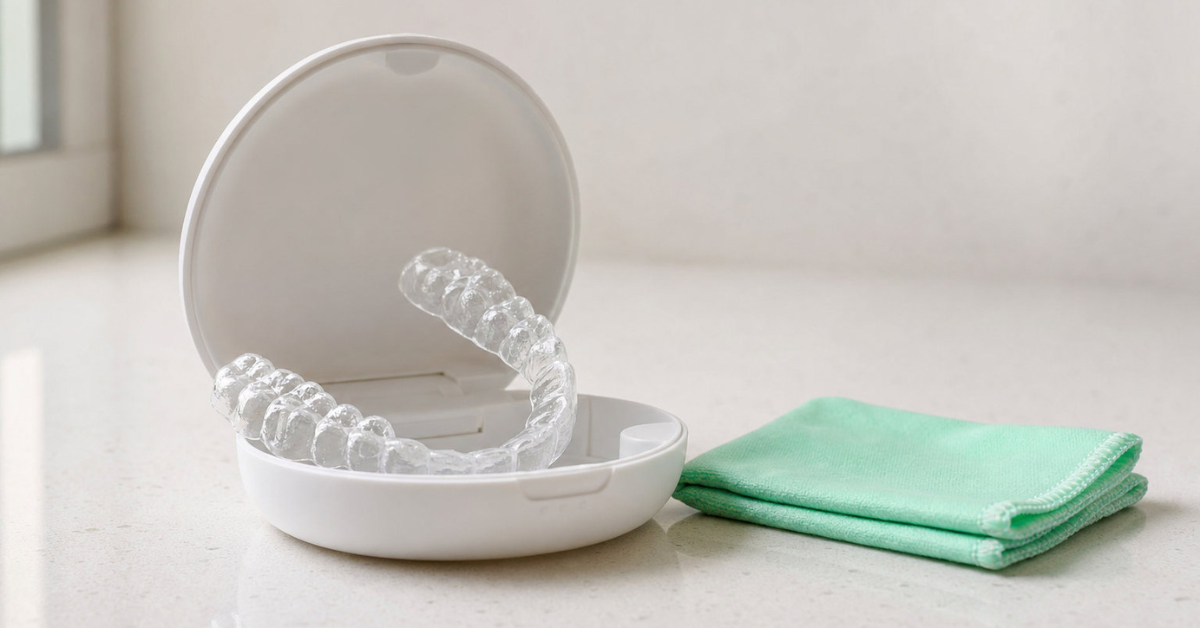
One notable benefit of clear aligners for families is their removability. Aligners can be taken out for meals, family events, and snacks, which often makes mealtimes less restrictive compared to fixed braces. Storing aligners in a case during meals or activities also helps prevent loss or damage.
Comfort is an important factor, especially for families with busy children or parents. As aligners lack metal wires and brackets, they usually cause less irritation to cheeks and lips. Mild pressure or tenderness is common initially but often subsides as wearers adjust. Many young people appreciate that aligners are hard to notice, which can help maintain confidence at school or in social situations.
Oral hygiene and building daily habits at home
Oral hygiene is often simpler with clear aligners compared to fixed braces because the trays are removed before brushing and flossing. This makes it easier to thoroughly clean both teeth and aligners and to reduce the risk of trapped food or plaque that can accumulate around brackets and wires.
For families, consistent routines are essential for successful treatment. Teenagers especially may need prompts to build good habits, such as carrying a case, rinsing aligners before returning them to the mouth, and cleaning them daily. Consistency with these routines supports steady progress with Invisalign.
Managing appointments, progress, and realistic outcomes
Clear aligner therapy usually requires fewer in-practice visits than traditional braces, with appointments often recommended every six to eight weeks to check progress and adjust the plan as needed. This can make it easier to accommodate family schedules, school holidays, and other commitments.
When starting with Invisalign, families are often advised to aim for the typical recommended wear time of 20 to 22 hours per day, but it is important to follow individual clinical advice as recommendations may vary. Adjusting to aligners may involve an initial period of mild discomfort or changes in speech, which often improves with time. Misplacing aligners is possible, but establishing routines and using a storage case can help prevent this. In rare situations where both orthodontic alignment and complex tooth replacement or restoration are needed, options such as zygomatic implants in London may be discussed as part of a broader dental plan. For most families choosing Invisalign, following care instructions and attending regular appointments ensures that treatment progresses safely and appropriately.
*This is a collaborative post. For further information please refer to my disclosure page.
Related Posts:
Nurturing Resilience: Helping Children of Mothers in Drug Rehab Build Coping Skills

A mother's presence and care are essential for a child's development, from infancy through adolescence and into adulthood. Her love Read more
Top Tips to Improve Your Parent Visa Application Approval Chances

Applying for a parent visa can be an emotional and complex journey, especially when you're hoping to reunite with family Read more
5 Things You Must Do Before Buying A Car In Utah

For some people, buying a car will be one of their largest life commitments. For most of us, it will Read more
Understanding Bladder Tumours and the TURBT Treatment

Discovering blood in your urine or changes in your bladder habits can be worrying, but you’re not alone. Many people Read more