
What to Consider Before Trying a Non-Surgical Skin Treatment
*Collaborative Post
Have you ever found yourself scrolling late at night and stopping on yet another “before and after” skin video? One minute you’re happily getting on with your day. Next, you’re wondering whether you should be doing something about the lines around your eyes.
Non-surgical skin treatments are everywhere right now, and clinics and social media make them look quick and simple. But with so many options, prices and promises, it can be hard to know where to start, or whether a treatment is right for you at all.
For lots of us, a good serum and a decent moisturiser are more than enough. If you’re thinking about going a step further, though, here’s what’s worth understanding before you book anything.
Start With What’s Actually Bothering You
Before looking at treatments, look at your skin. What would you genuinely like to change?
It might be uneven texture, pigmentation or dullness. It could be fine lines, or skin that feels less firm than it used to. Hormones can play a part too, something many women notice during perimenopause.
Naming the concern matters because different treatments do very different jobs. It also helps you keep expectations realistic. Non-surgical treatments usually bring subtle, gradual changes rather than the results of surgery. Nobody can promise exactly how your skin will respond.
Surface Treatments vs Those That Work Deeper
Your skin has layers. The outer layer, the epidermis, is what you see and touch. Underneath sits the dermis, where collagen helps keep skin firm.
Some treatments mainly work on the surface. Light chemical peels, for example, remove dead skin cells to help with texture and dullness.
Others reach deeper:
- Microneedling uses tiny needles to prompt the skin’s own repair process.
- Radiofrequency devices use heat to target the dermis.
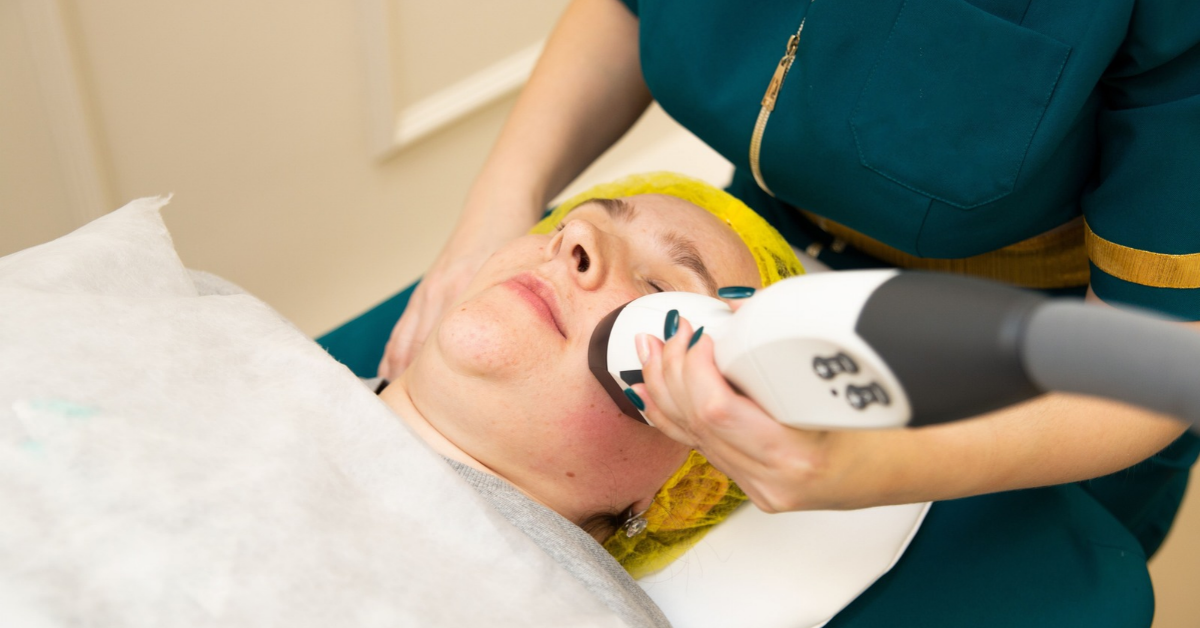
- Ultrasound-based treatments such as Sofwave deliver energy to the mid-dermis to stimulate collagen. They are used for fine lines and mild to moderate skin laxity (looseness).
With deeper treatments, any change tends to build over several months as new collagen forms. Whether one suits you depends on your skin, your health and what you’re hoping for.
Check Who Will Be Treating You
This is the step people often skip, and it’s arguably the most important.
In England, there are currently few legal restrictions on who can carry out many non-surgical procedures. The government has committed to a licensing scheme, but it isn’t in place yet.
So the checking is down to you. If your practitioner is a doctor, look them up on the GMC register. The JCCP register also shows which procedures its members are qualified to carry out.
Ask where the treatment will take place too. A clean, clinical setting with a clear plan for complications is a good sign.
Be Honest About Your Health History
A good practitioner should ask plenty of questions before treating you. Answer them fully, even if something feels unrelated.
Several things can affect whether a treatment is suitable for you:
- Pregnancy or breastfeeding
- Active skin conditions, such as eczema or cold sores
- Metal implants
- Some medications
Skin tone matters too, as certain lasers and peels carry a higher risk of pigment changes on some skin types.
If anyone is happy to treat you without asking these questions, treat that as a red flag.
Understand the Costs, Downtime and Side Effects
Most non-surgical results aren’t permanent. Many treatments need several sessions and top-ups, so think about the long-term cost rather than one appointment. A deal that seems too cheap is worth questioning.
Recovery varies. Some people carry on as normal, while others need a few days for redness or swelling to settle.
Non-surgical doesn’t mean risk-free either. The British Association of Dermatologists notes that peels can cause burning and even permanent discolouration. It also notes that lasers can cause burns if used incorrectly. Follow your aftercare instructions closely.
Questions to Ask Before You Book
Take this list along to your consultation:
- What qualifications and training do you have for this treatment?
- Is this the right treatment for my concern, and are there alternatives?
- Am I suitable, given my health and skin type?
- When might I see a change, and how long could it last?
- What are the common side effects and rarer risks?
- What happens if something goes wrong?
- What is the total cost, including follow-ups?
- Can I take time to think before booking?
A good practitioner will welcome these questions and won’t push you into a same-day decision.
Tuning Out the Noise and Choosing What Feels Right for You
Those videos will keep popping up, but your decision doesn’t need to be rushed. Take your time, read reliable sources and speak to someone properly qualified.
And if you decide a treatment isn’t for you after all, that’s a perfectly good outcome too.
*This is a collaborative post. For further information please refer to my disclosure page.
Related Posts:
Why Terrazzo Tiles Are Melbourne’s Hottest Interior Design Trend in 2025

In Melbourne’s vibrant interior design scene, each year ushers in fresh aesthetics and materials. But in 2025, one tile material Read more
How To Create A Casual Look That Will Turn Heads

As a parent, a casual look suits me. I can move about easily, I can bend down and pick up Read more
Everything You Need to Know About Vivace Radiofrequency Microneedling

Keeping your skin healthy in a city like San Diego demands extra effort. You cannot rely on standard serums and Read more
Mercedes-Benz VIN Decoding Can Help You Find Out the History of Your Vehicle

VIN decoding plays a crucial role in understanding the history and details of your Mercedes-Benz vehicle. This article aims to Read more