
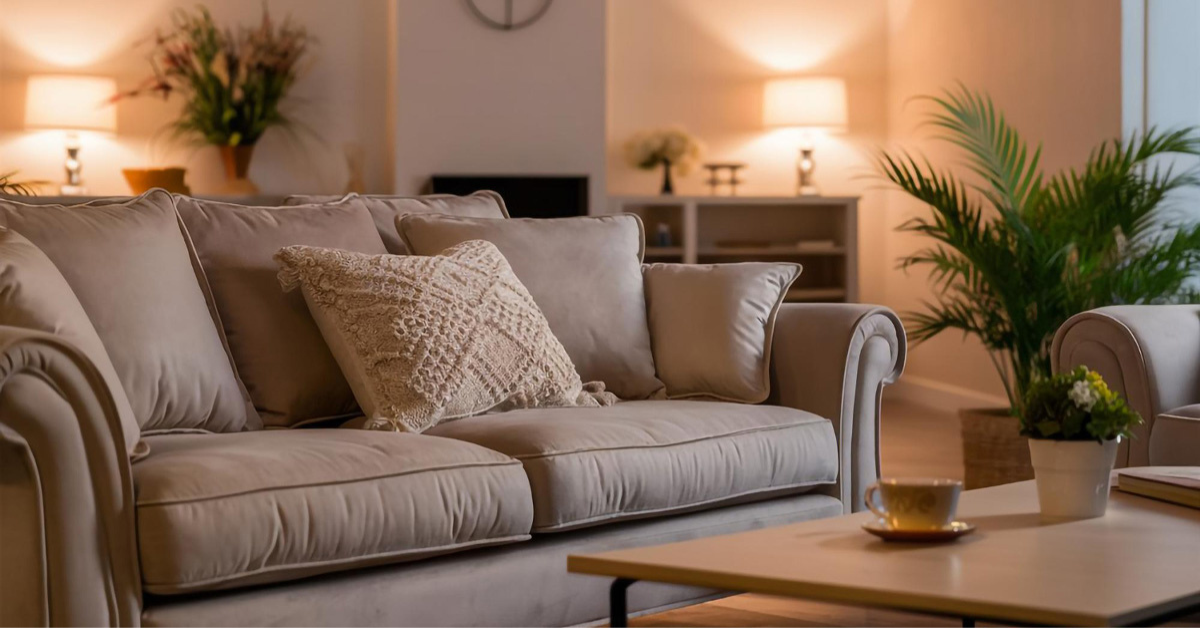
Calm Home Lighting: A Complete Guide to Warm, Soothing Light
*Collaborative Post
Most evenings at our house are pretty much the same. After we clear dinner away, the kids roam around, back and forth from the sofa to the stairs, just overtired and stuck in that weird zone where they either laugh at literally everything or totally fall apart over, like, nothing.
No wonder it’s hard for anyone to calm down and wind down. A bright white bulb overhead does very little to tell a busy little body that the day is winding down.
I started paying proper attention to lighting in our home a couple of years ago, mostly because I was chasing calm wherever I could find it. Warm light turned out to be one of the cheapest, quickest changes I made, and one of the few the whole family noticed without me explaining it.
This is what I have learned about calm home lighting since then. The bits that worked, the bits that did not, and where a softer glow genuinely earns its place in a family space.
Why warm light feels calmer (the quick science bit)
Light has a temperature, measured in kelvin, and the number tells you how warm or cool it looks. Lower numbers, roughly 2200K to 2700K, give you that soft amber glow you get from a candle or an old-fashioned filament bulb. Higher numbers, 4000K and up, push towards the cold blue-white of an office or a supermarket aisle.
Our bodies read that difference without being asked. Bright, blue-heavy light in the evening tells the brain it is still daytime, which is the last message you want to send a child at bedtime.
The Sleep Foundation points to evening exposure to blue light as one factor that can delay the release of melatonin, the hormone that helps us drift off. Warmer light carries far less of that blue, so it sits much more gently on a household winding down.
You do not need to memorize any of this. You need to know that swapping a cold bulb for a warm one is doing something real, not just looking nice.
Start with the bulbs you already have
Before buying anything, look at what is already screwed into your fittings. Most of us never check, and a lot of homes are running a random mix of warm and cool bulbs that fight each other from room to room.
Bulb boxes list the color temperature, usually near the wattage. For living rooms, bedrooms, and hallways, I aim for 2700K, sometimes lower. Kitchens and bathrooms can use something brighter for the work that happens there, though I still keep mine on the warmer side of neutral. If you want one easy win this week, replace the bulbs in the room where your family unwinds and see how the mood shifts by the weekend.
Dimmable bulbs are worth the small extra cost. Being able to drop the brightness as the evening goes on, rather than choosing between full glare and total darkness, changes how a room feels more than almost anything else.
Where a neon sign quietly earns its place
This is the part I did not expect to be writing. I always filed neon signs under “nice for a bar,” not “useful in a family home.” Then I started noticing how well a soft, wall-mounted glow works as that low evening light layer, and I changed my mind.

A modern LED neon sign is not the hot, fragile glass tubing you might picture. It is an LED strip inside a flexible silicone-style casing, mounted on a backboard, and it runs cool to the touch and sips very little power.
Because it mounts to the wall, it adds a warm pool of light without taking up a single inch of surface or leaving a cable for little hands to find. On a dimmer, a warm-toned design makes a lovely last-light-of-the-night glow once the main lights go off.
In a child’s room, it does something gifts rarely manage. It is calming and personal at once. A name, a favorite word, a little moon, or a rainbow in soft, warm light can double as a nightlight that is far gentler than a bright plug-in.
If you want a sense of what actually works at that age, this guide to LED neon signs for kids’ rooms is a sensible starting point, because not every color or design suits a bedroom, and a few are far too stimulating for bedtime.
I will be honest about the limitations, because that matters more than a sale. A custom sign costs more than a lamp; it is a decorative light rather than something to read by. You want a warm color and a dimmer for a bedroom, not a punchy cool blue. Treated as a single piece rather than a wall full of them, it is a genuinely calming addition.
If you are curious about made-to-order options, a custom neon sign can be matched to a word or shape that suits the room, rather than settling for whatever the shop has in stock.
Layer your light rather than relying on a single big light.
The single biggest mistake I made for years was treating the ceiling light as the answer to everything. One harsh overhead light flattens a room and casts shadows in all the wrong places. Interior designers talk about layering light for a reason, and once you see it, you cannot unsee it.
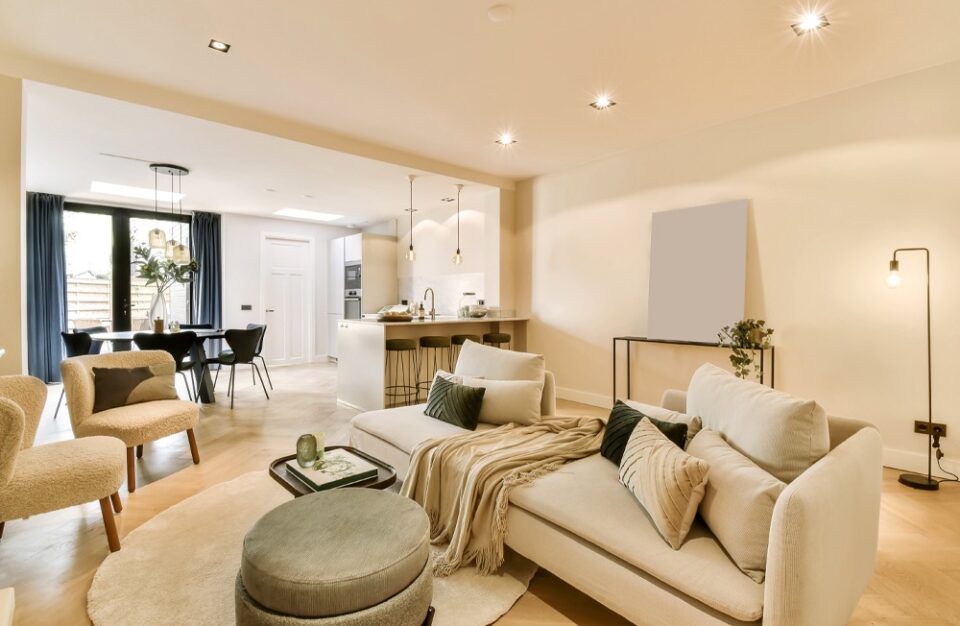
The idea is simple. You build a room from a few smaller pools of light rather than one big wash. A table lamp glowing in the corner does one job, a floor lamp by the reading chair does another, and something low and warm on a shelf softens the rest. Together, they let you adjust the room’s temperature up or down depending on the time of day.
This is also where families tend to get stuck. Lamps need surfaces, surfaces get covered in homework and half-built Lego, and trailing cables near small children are a genuine worry. So the trick is finding warm light that doesn’t eat up your floor space or hang at toddler height.
Small habits that matter more than any gadget
Kit only gets you so far. The free changes did as much for the feel of our evenings as anything I bought.
Turn the big light off earlier than it feels natural and let the lamps take over. Screens are the other culprit, so keep them out of the bedroom in the last hour before sleep, since a tablet undoes a lot of careful lighting in seconds.
Mornings matter too. Open the curtains wide first thing, because plenty of bright morning light helps the body know when it is properly daytime, which in turn makes the evening wind-down land better. None of this is new, and that is the point. Calm at home tends to come from a handful of small, repeatable choices rather than one big purchase.
Pulling it together
If you only change one thing, make it the bulbs in the room where your family gathers at night. Warm over cool, dimmable if you can stretch to it. From there, add a lamp or two so you are not leaning on the ceiling light, and if you want a warm glow that stays out of the way, a wall-mounted neon piece earns its keep in a way I genuinely did not predict.
A calmer home is not really about the lights. It is about giving everyone, including the frazzled parent flicking switches at half seven, a clear signal that the day is done. Warm light is one of the easiest ways to send it.
*This is a collaborative post. For further information please refer to my disclosure page.
Related Posts:
Personalised Number Plates as Investments

*Collaborative Post If you have ever considered whether or not a personalised number plate is a good investment the short Read more
From India To Your Table: try this delicious Basmati rice dish

*Collaborative Post Rice is one of those ingredients widely included in almost every meal worldwide. Maybe you have cooked it Read more
Review | Family Photo Session With Ewa Jones Photography

*Gifted Session Getting the perfect family photo can be tricky, can't it? In fact, we have so very few of Read more
Flexible Career Paths in Healthcare Administration for Busy Adults

Rerouting to a new career is not uncommon for adults. However, the prospect of investing a significant amount of time Read more