Vegetable-Tanned, Chrome-Free, Bio: A Buyer’s Glossary for Leather
*Collaborative Post
Leather is where sustainable fashion vocabulary is at its least useful. A product page can say “responsibly sourced,” “eco leather,” “natural” and “chrome-free” without any of those words describing the same thing, and two of them are not descriptions at all. Meanwhile the one word that carries genuine process information, the tannage, often does not appear anywhere.
This is a glossary for reading those labels. It does not argue that any one material is best. It argues that you should be able to tell what you are buying, which is currently harder than it should be.
Start with tanning, because that is where the decisions are
A raw hide will rot. Tanning is the chemistry that turns it into a stable material, and it is the stage where the significant environmental and material choices happen, far more so than the farm, the stitching or the packaging, which is where most marketing copy prefers to look.
Chrome tanning uses chromium salts and accounts for the large majority of leather produced worldwide. It is fast (a day or so), cheap, and produces a soft, uniform, easily dyed material that is stable in water. Its reputation depends heavily on the tannery: chromium III, the form used in tanning, is a different substance from chromium VI, and the environmental question is about effluent handling and process control rather than about the element in isolation. A well-run chrome tannery and a badly run one are not comparable operations.
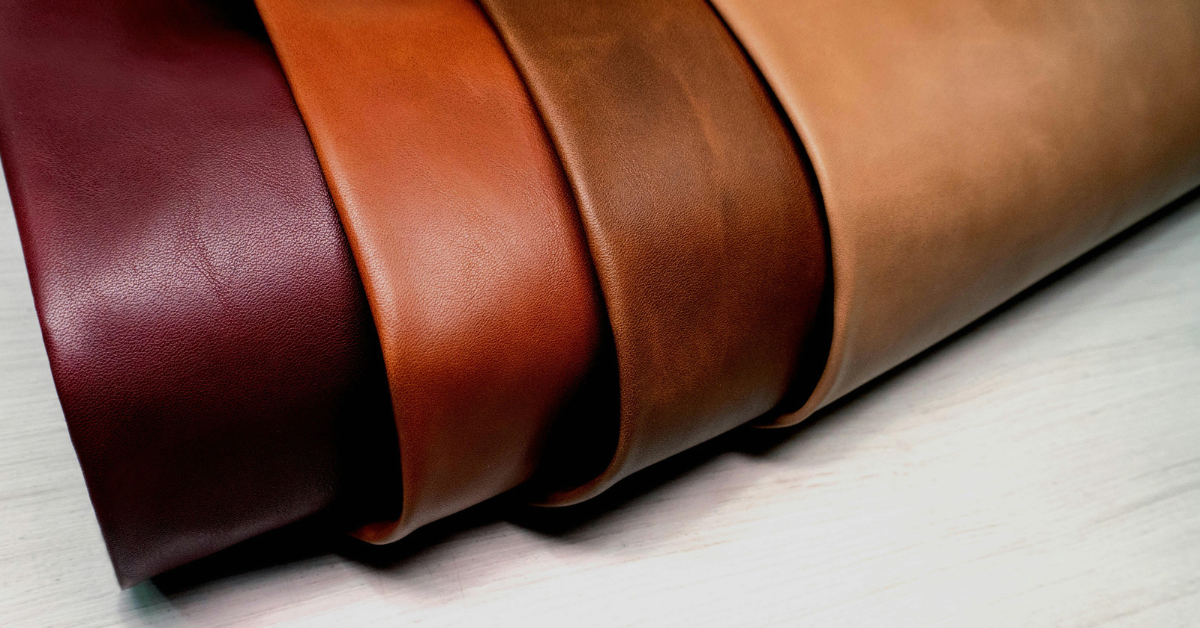
Vegetable tanning uses tannins from bark, wood, leaves and fruit: traditionally oak, chestnut, quebracho and mimosa. It takes days or weeks rather than a day, uses more water and more labour, and costs considerably more. The resulting leather is firmer, has a warmer natural tone, and darkens and develops a patina with use. It also moulds to whatever it is against, which is why it is the traditional choice for saddlery and for shoes intended to shape themselves to a particular foot.
Chrome-free means only that chromium was not used. It does not mean vegetable-tanned. It commonly means an alternative mineral or synthetic tannage, which has its own profile. The phrase tells you what is absent, not what is present. That distinction is worth holding onto, because it is doing a lot of work in a lot of product descriptions.
Metal-free is a stronger and more specific version of the same claim, and it is the one that appears in certain biodegradability standards. Where it is used properly, it is usually accompanied by a certification reference. Where it is not, treat it as a synonym for chrome-free.
“Eco leather,” “bio leather,” “natural leather” are unregulated. “Bio” in particular means completely different things in different markets. Sometimes a plant-based alternative with no hide in it at all, sometimes a hide leather with a specific tannage. Always look for the process word behind it.
“Vegan leather” means no animal hide. It says nothing at all about what the material is instead, which ranges from polyurethane on a polyester backing to genuinely novel plant-based composites. The environmental comparison here is not simple in either direction, and anyone presenting it as simple is selling something.
Three questions that cut through it
1. How was it tanned? One word: vegetable, chrome, chrome-free, metal-free, or a named alternative. A brand that knows its supply chain answers immediately. A brand that does not will answer with an adjective. This single question separates more than any other.
2. Where was it tanned, and where was the shoe made? Tanning regulation is jurisdictional, and effluent treatment is the part that actually matters. “Made in Italy” or “made in Portugal” for the shoe does not tell you where the hide was processed, and the two are frequently different countries.
3. Can it be repaired, and can parts be replaced? This is the least glamorous question and probably the most consequential. A shoe that is resoleable and whose footbed can be bought separately has a materially different lifespan from one that cannot, and lifespan tends to dominate any per-item materials comparison. It is also the easiest claim to verify. Either the part is for sale or it is not.
What a legible answer looks like
For an illustration of what it looks like when a brand actually answers those three, the Finnish label VIBAe publishes the tannage rather than an adjective: chrome-free vegetable-tanned leather, with a metal-free biodegradable leather used on its sneaker. It also names the certification: the hides are tanned at an LWG-certified tannery and sourced as a by-product of the food industry, and it puts a number on the end of the material’s life: an internal test to the ISO 20200 standard in which the leather broke down completely in 126 days in a method that simulates industrial composting conditions. Those are the kind of details that are either true and auditable or absent. Production is at a family-run factory just outside Porto in Portugal, and the company has written up its tannery’s process, including why it uses vegetable-tanned leather and where the hides come from, rather than leaving it at a label. The footbed inside the shoes is sold separately as a replacement part from around £45, which answers question three without requiring anyone to take a claim on trust.
The brand also runs a resale programme for used pairs and has published a sustainability strategy developed with an external partner rather than in-house. None of that makes a shoe environmentally free; it makes the claims checkable, which is a lower bar and a more useful one than most of the category clears.
What vegetable-tanned leather does after you buy it
One practical reason the tannage is worth asking about: it changes what ownership looks like. Chrome-tanned leather is engineered to stay close to how it left the factory: uniform colour, stable in water, consistent from the first day to the last. That is a genuine advantage if you want a shoe that does not visibly age.
Vegetable-tanned leather does the opposite. It darkens unevenly, takes colour from sunlight and from whatever it touches, and develops a patina that is specific to the person wearing it. The corollary is that it is less forgiving early on: it marks more easily, it takes water badly until it has been conditioned, and a new pair looks its worst somewhere around week three, before it starts looking better.
Care is correspondingly different. A vegetable-tanned shoe wants a conditioning cream rather than a silicone-based protector, wants to dry slowly and away from radiators, and wants the footbed taken out overnight if it has got damp. None of that is difficult, but it is a different maintenance model from the one most people learned on synthetic-finished shoes, where the answer to everything is a wipe with a cloth.
Worth knowing before you buy, because the two materials fail differently. Chrome-tanned leather tends to stay looking acceptable and then crack. Vegetable-tanned leather looks progressively more used from the beginning and stays serviceable for considerably longer. Which of those you want is a preference, not a ranking. But it is a preference you can only exercise if the brand tells you which one is in the box.
The takeaway
Ignore the adjectives. Ask for the tannage, the jurisdiction and the parts availability. Three questions, three factual answers, and no marketing language survives them. If a brand cannot supply all three, the honest reading is not that the answers are bad. It is that nobody at the company knows them, which is its own kind of answer.
*This is a collaborative post. For further information please refer to my disclosure page.
Related Posts:
5 Signs Money Stress is Getting on Top of You

Money stress – it’s one of the worst feelings in the world. Not only does it have a horrible impact Read more
5 Tips In Identifying your Home Decor Style

Home decor styles are an essential component of our homes. It provides taste, boldness, and creativity that just radiates to Read more
Are You a Frequent User of Hair Straighteners? Read This Post
Straight hair has become a popular styling choice for many. Chemical hair straighteners have boomed in popularity in recent years, Read more
The Ultimate Guide to Oral Health: Why Regular Dental Cleaning Matters

We all know that maintaining a healthy smile is crucial, but have you ever wondered why regular dental cleaning matters Read more